
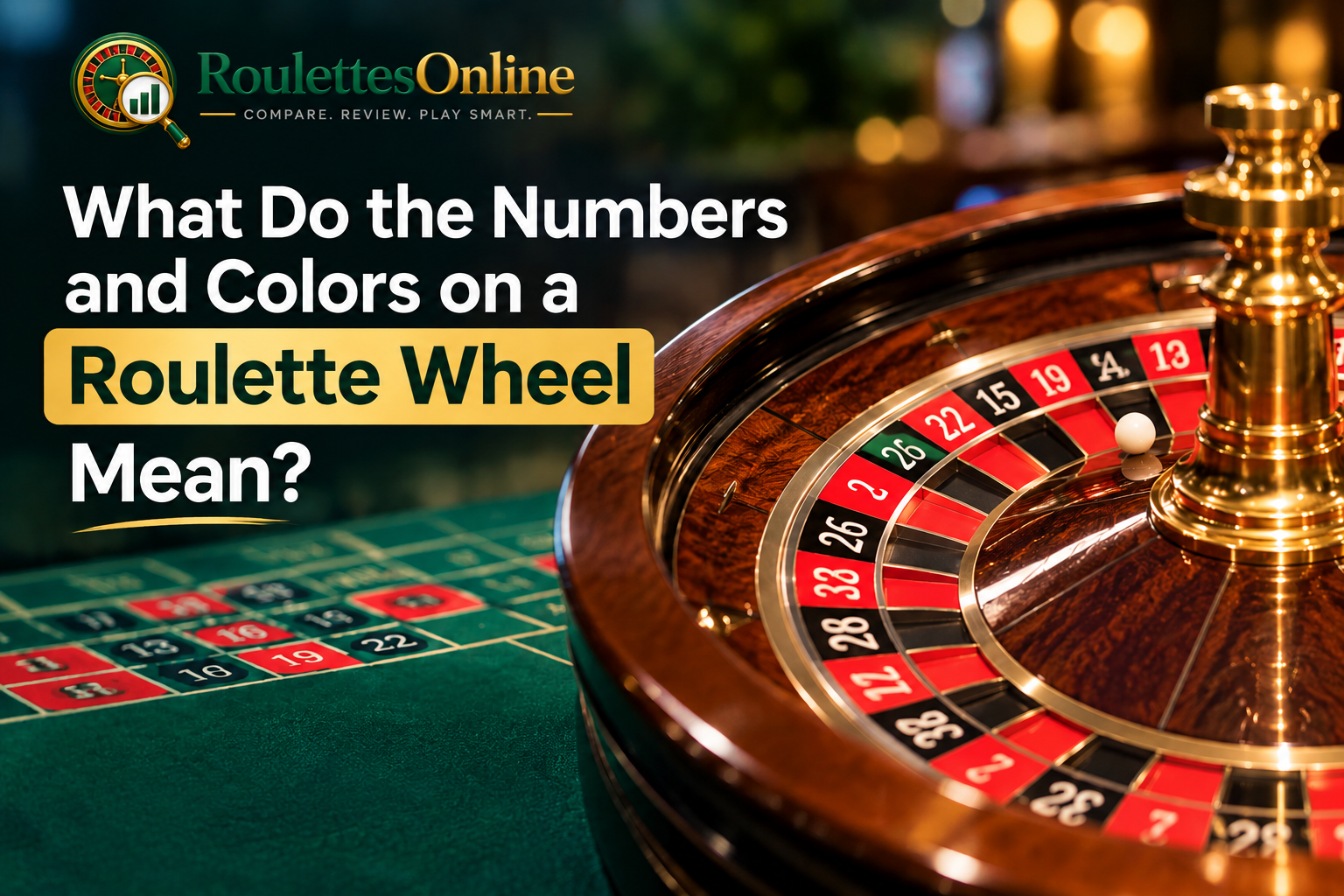
A roulette wheel may look simple at first glance, with its spinning pockets, alternating red and black sections, and a small green zero. However, every number and color has a specific purpose. Understanding these details makes the game easier to follow, whether you are watching a physical roulette wheel, learning the rules for the first time, or exploring online roulette.
The numbers determine where the ball lands, while the colors help players identify different betting options. The arrangement also varies between American, European, and French roulette wheels, which is important because these differences affect the odds and house edge.
If you have ever wondered why a roulette wheel contains both red and black numbers, why zero is green, or why the American version has an additional pocket, this guide explains everything in straightforward terms. By understanding the wheel's design, you can read the betting layout more confidently and recognize how different roulette variations work.
Key Takeaways About Roulette Wheel Numbers and ColorsEuropean and French roulette wheels have 37 pockets, while American roulette wheels contain 38 pockets, including zero and double zero. Roulette numbers follow a fixed sequence, but every pocket has an equal chance on a fair, properly functioning wheel. Red and black each cover 18 numbered pockets, while green zero pockets contribute to the house edge. Standard roulette payouts vary by bet type, with single-number bets paying more than broader outside bets. European roulette generally has a lower house edge than American roulette, while French rules may reduce losses on eligible even-money bets. |
Understanding the Numbers on a Roulette Wheel
The numbers on a roulette wheel represent the pockets where the ball can land after each spin. Although the betting layout displays numbers in an orderly grid, the physical wheel places them around a circular track in a specific sequence.

The number of pockets depends on the roulette variation you are playing.
European Roulette Wheel
A European roulette wheel contains 37 pockets, numbered from 0 to 36. It has one green zero pocket, 18 red pockets, and 18 black pockets.
The single-zero design is one of the main reasons European roulette generally offers better mathematical odds than standard American roulette. With 37 possible outcomes and a single-zero pocket, the standard house edge is approximately 2.70% on most conventional bets.
The numbers are not arranged sequentially around the wheel. Instead, they follow a predetermined order designed to distribute high and low numbers, odd and even numbers, and red and black pockets around the wheel.
For players, the most important detail is that every number has the same probability of appearing on a fair wheel. A number that has not appeared for several spins does not become more likely to appear on the next one.
American Roulette Wheel
The American Roulette Wheel contains 38 pockets: numbers 1 through 36, a single zero (0), and a double zero (00). The numbered pockets are divided equally between red and black, while both zero pockets are green.
The additional double-zero pocket changes the mathematics of the game. On a standard American wheel, there are 38 possible outcomes, compared with 37 on a European wheel.
For most conventional bets, the American roulette house edge is approximately 5.26%. This is higher than the standard 2.70% house edge on a European wheel.
The extra green pocket does not provide an additional winning opportunity for ordinary number bets. Instead, it creates another outcome that can cause most bets to lose.
French Roulette Wheel
A French Roulette Wheel also contains 37 pockets, including one green zero and 36 numbered pockets divided between red and black. Its basic wheel structure is similar to that of a European wheel.
The key difference is often found in the rules rather than the number of pockets. French roulette tables may offer special rules such as La Partage and En Prison, which can reduce losses on eligible even-money bets when the ball lands on zero.
With La Partage, a player generally receives half of an eligible even-money stake back when zero appears. Under En Prison, the stake may remain in play for the next spin, subject to the table's rules.
These rules can lower the effective house edge on qualifying even-money bets to approximately 1.35%. However, the exact rules should always be checked before playing.
Why Are Roulette Numbers Arranged in a Specific Order?
One interesting feature of roulette is that the wheel's number sequence does not match the numerical order shown on the betting layout. Instead of placing 1, 2, 3, 4, and so on next to each other, the wheel uses a carefully established arrangement.
This design helps distribute different number categories around the wheel. High and low numbers, odd and even numbers, and red and black pockets appear in a mixed sequence rather than in simple numerical blocks.
The arrangement is also part of the traditional design of roulette. It helps distinguish the physical wheel from the rectangular betting layout, where numbers are grouped in rows and columns for convenient betting.
However, the order does not make any particular number more likely to win. On a fair, properly functioning wheel, each pocket has an equal chance of being selected on a single spin.
For example, if number 17 appears several times during a session, that history does not make it more or less likely to appear on the next spin. Each spin is an independent event, assuming the wheel is operating fairly.
What Do Red, Black, and Green Mean?
Roulette colors are more than decoration. They identify pockets and support several common betting options.
Red Pockets
Red is assigned to 18 of the 36 numbered pockets on standard European, French, and American wheels. Players can place a red bet to win if the ball lands in any red pocket.
Red is considered an even-money bet because the payout is typically 1:1. A winning $10 bet, for example, earns $10 in profit, with the original stake also returned.
Although there are 18 red numbers, a red bet does not have a 50% chance of winning on a standard roulette wheel. The green zero pocket, or zero pockets on the American wheel, must also be considered.
Black Pockets
Black covers the other 18 numbered pockets. Like red, black is an even-money betting option and generally pays 1:1.
The probability of winning a black bet depends on the wheel variation:
- European roulette: 18 winning pockets out of 37.
- American roulette: 18 winning pockets out of 38.
- French roulette: 18 winning pockets out of 37.
Because the green zero pocket is not black, a standard black bet loses when zero appears, unless a special rule applies to that bet. The same principle applies to red.
Green Zero Pockets
Green is used for the zero pocket on European and French wheels and for both 0 and 00 on American wheels. These pockets are especially important because they contribute to the house edge.
For example, a red bet on a European wheel wins on 18 of 37 possible outcomes. The remaining outcomes include 18 black pockets and the green zero.
On an American wheel, the extra green 00 pocket creates another losing outcome for most standard bets. This is why the American version has a higher house edge.
Green does not mean that the pocket is automatically a winning number or that it is more likely to appear. It is simply the color assigned to the zero pockets.
How Do Roulette Colors and Numbers Affect Betting Options?
Once you understand the wheel's numbers and colors, it becomes easier to recognize the main categories of roulette bets. Each type covers a different number of possible outcomes and has its own payout.
Inside bets focus on individual numbers or small groups of numbers. Outside bets cover broader categories, such as colors, odd or even numbers, and high or low numbers.
Here are some common bets and their standard payouts:
| Bet Type | Numbers Covered | Typical Payout |
| Straight-up | One number | 35:1 |
| Split | Two numbers | 17:1 |
| Street | Three numbers | 11:1 |
| Corner | Four numbers | 8:1 |
| Six line | Six numbers | 5:1 |
| Dozen | 12 numbers | 2:1 |
| Column | 12 numbers | 2:1 |
| Red or black | 18 numbered pockets | 1:1 |
| Odd or even | 18 numbered pockets | 1:1 |
| High or low | 18 numbered pockets | 1:1 |
These are standard payouts; specific games may offer different rules or betting limits.
A straight-up bet on a single number pays 35:1 because the player is predicting one particular pocket. A red bet covers 18 numbered pockets and pays 1:1 because it covers a much larger group of outcomes.
Importantly, the payout does not tell the whole story. When comparing options, both a bet's probability of winning and the wheel's house edge matter.
Zero also affects several outside bets. On standard European and American roulette tables, a zero result usually causes ordinary red/black, odd/even, and high/low bets to lose. French rules may provide a different outcome for qualifying even-money bets.
What Is the Difference Between a Roulette Wheel and a Betting Layout?
The roulette wheel and betting layout are two essential parts of the game, but each serves a different purpose. The wheel determines the outcome of a spin, while the betting layout allows players to choose where to place their chips.
| Feature | Roulette Wheel | Betting Layout |
| Main purpose | Determines the spin's outcome | Shows where bets can be placed |
| Appearance | Circular wheel with numbered pockets | Flat table or digital grid with numbers and betting areas |
| Key elements | Numbers, red and black pockets, and green zero pockets | Numbered squares, colors, dozens, columns, and outside bets |
| Role in the game | The ball lands in one pocket | Players select their predictions before the spin |
How Do They Work Together?
For example, if you want to bet on number 8, you place your chip on the number 8 square on the betting layout. If you want to bet on black, you place your chip in the black betting area instead.
Once betting closes, the dealer spins the wheel and releases the ball. The winning result is the pocket where the ball comes to rest. Your bet wins or loses according to that result and the game's rules.
In online roulette, both elements appear on the screen. The wheel may be shown through animation or a live dealer video, while the digital betting layout lets you select numbers and betting options.
Understanding the difference between the two makes it easier to follow the game, especially when moving between a physical table and an online roulette casino.
How to Read a Roulette Wheel When Playing Online
Follow these steps to understand an online roulette game before placing a bet.
Step 1: Check the Roulette Variant
Identify whether the game uses a European, French, or American wheel. European and French roulette typically have 37 pockets, while American roulette has 38, including 0 and 00. This difference affects the odds and house edge.
Step 2: Understand the Betting Layout
Locate the numbered grid and the outside betting areas. The grid lets you select individual numbers or combinations, while the outside sections cover options such as red or black, odd or even, high or low, dozens, and columns.
Step 3: Review the Payouts and Rules
Check the payout table, minimum and maximum stakes, and any special rules before playing. If the game offers French roulette rules such as La Partage or En Prison, confirm which bets qualify when zero appears.
Step 4: Identify How the Game Works
Online roulette may use a random number generator (RNG) to determine outcomes or feature a live dealer spinning a physical wheel. Check the game's description to understand which format you are playing.
Step 5: Treat Each Spin as Independent
Do not assume a number or color is due to appear because it has been absent or appeared repeatedly. On a fair wheel, each spin is independent, and previous results do not determine the next outcome.
By following these steps, you can understand the wheel, interpret the betting layout, and check the rules and payouts more confidently. Remember that roulette is a game of chance, and no number pattern or betting system can guarantee a profit.
Common Misunderstandings About Roulette Numbers and Colors
Several misconceptions can make roulette more confusing than it needs to be.
- Red and black do not have exactly equal chances of winning. Although each color has 18 numbered pockets, the green zero pockets reduce the probability of either color winning.
- A number is not due to appear after a long absence. Each spin on a fair wheel is independent. Previous results do not make a particular number more likely on the next spin.
- Green is not a special bonus color. The zero pockets are part of the wheel's mathematical structure and generally cause standard outside bets to lose.
- Higher payouts do not automatically mean better value. A straight-up bet pays more than a red bet, but it also has a much lower probability of winning. Compare both the payout and the chance of success.
- Different roulette versions are not mathematically identical. The additional double zero on an American wheel changes the odds, while French rules can improve the expected outcome for certain even-money bets.
Understanding these points helps players distinguish the game's actual rules from common gambling myths.
Final Thoughts
The numbers and colors on a roulette wheel make the game easier to understand once you know what each element represents. Numbers identify individual outcomes, red and black support common even-money bets, and green marks the zero pockets that influence the house edge.
The European and French wheels contain 37 pockets, while the American wheel contains 38 because it includes both 0 and 00. French roulette may also offer rules that reduce losses on eligible even-money bets.
Whether you are learning roulette at a physical table or exploring online roulette, understanding the wheel's structure provides a clearer picture of how bets work and why the odds differ. Remember that roulette is a game of chance: no color pattern, number sequence, or betting system can guarantee a profit.
Responsible Gambling
Roulette is a game of chance, and no number pattern, color sequence, or betting strategy can guarantee a profit. Set a budget before playing, wager only what you can afford to lose, and never chase losses. Take breaks and stop if gambling becomes stressful or affects your finances or relationships. Follow the gambling laws and age requirements in your location. For support, visit GamCare or Gambling Therapy.
Disclaimer
This article is for informational and educational purposes only. It explains roulette wheel layouts, colors, number sequences, standard payouts, and general odds; it does not guarantee results or provide financial advice. Roulette rules, payouts, and special features can vary by operator and game variant. Check the official game rules before playing and ensure that any gambling activity complies with the laws applicable to your location.
FAQs
1. How many numbers are on a roulette wheel?
A European or French roulette wheel has 37 pockets, numbered 0 through 36. An American roulette wheel has 38 pockets because it includes both 0 and 00.
2. Why are zero pockets green in roulette?
Green distinguishes the zero pockets from the red and black numbered pockets. These pockets affect the probability of winning many standard bets and contribute to the house edge.
3. Are red and black equally likely to win in roulette?
No. Although there are 18 red and 18 black numbered pockets, the green zero pocket on European and French wheels and the two green pockets on American wheels reduce the probability of either color winning.
4. Which roulette wheel has the best odds?
European and French roulette generally offer better odds than standard American roulette because they have only one zero. French rules such as La Partage can further reduce the house edge on eligible even-money bets.
5. Do roulette numbers follow a pattern that predicts the next result?
No reliable pattern predicts the next result on a fair roulette wheel. Each spin is independent, so previous numbers and colors do not determine what will happen next.