At first glance, a roulette table can look more complicated than it really is. Rows of numbers, colored sections, outside bets, and a spinning wheel can leave a new player wondering where to start. The good news is that once you understand how the wheel and table work together, the french roulette game becomes much easier to follow.
French roulette has a distinctive character compared with other roulette variations. It uses a single-zero wheel and traditionally features French-style terminology, table layouts, and rules such as La Partage. These details can make a meaningful difference to the mathematics of certain bets.
If you want to Play French Roulette, understanding the equipment and layout should come before worrying about betting strategies. This guide takes you through the wheel, table, numbers, betting areas, payouts, and important rules in a straightforward way.
What Beginners Should RememberFrench roulette uses a single-zero wheel: 37 pockets include numbers 1–36 and one green 0. Inside and outside bets differ: Inside bets cover fewer numbers, while outside bets cover broader groups and generally offer lower payouts. Zero affects the odds: The green 0 is neither red nor black, odd nor even, creating a mathematical house edge. French rules can matter: La Partage and En Prison may affect how eligible even-money bets are handled after zero. No strategy guarantees winnings: Previous spins cannot predict future results, so set a budget and treat roulette as entertainment. |
Start With the Wheel
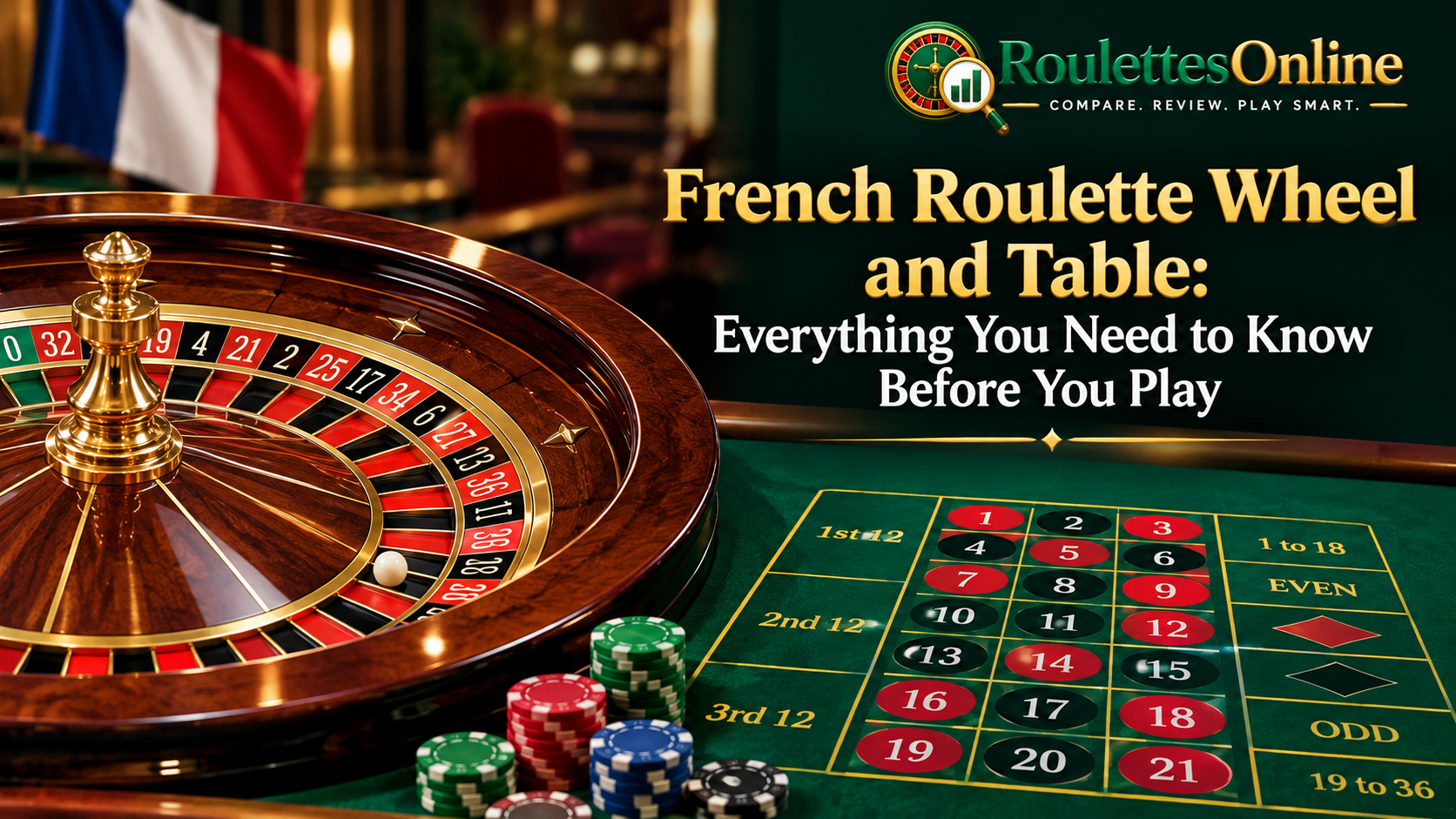
The roulette wheel is the heart of the game, as every spin ends with the ball landing in one of its pockets.
A standard French roulette wheel contains 37 pockets:
- Numbers 1 through 36
- One green 0
The numbers 1–36 are divided equally between red and black, with 18 red and 18 black numbers. The green 0 is separate from both colors and does not count as either red or black.
When the dealer spins the wheel and releases the ball, it moves around the wheel before slowing down and settling into one of the pockets. The pocket where the ball lands determines the winning number for that spin.
For beginners, one detail is especially important: the wheel does not have 36 pockets. It has 37, because of the additional green 0.
That single extra pocket plays an important role in roulette mathematics. It means that even bets such as red or black are not exactly 50/50, giving the house a mathematical advantage on most standard bets.
Why the Single Zero Matters
A single-zero wheel has a lower house edge than a double-zero wheel on comparable bets with standard payouts. Check the zero pockets and betting rules if you want to compare French roulette with other variants.
French roulette uses 37 pockets, including one zero. American roulette adds a double zero, bringing the total to 38. That extra pocket increases the number of losing outcomes for standard bets without increasing their payouts.
Under standard rules, French roulette has a house edge of approximately 2.70%, compared with 5.26% on most American roulette bets.
La Partage reduces the house edge further, to approximately 1.35% on qualifying even-money bets such as red/black, odd/even, and low/high. This reduction applies only when the rule is offered; it does not extend to every bet on the table.
The wheel layout and zero rules matter more than the game’s name or appearance. A single zero establishes the basic odds, while rules such as La Partage determine how qualifying wagers are settled when zero lands.
Getting Familiar With the French Roulette Table
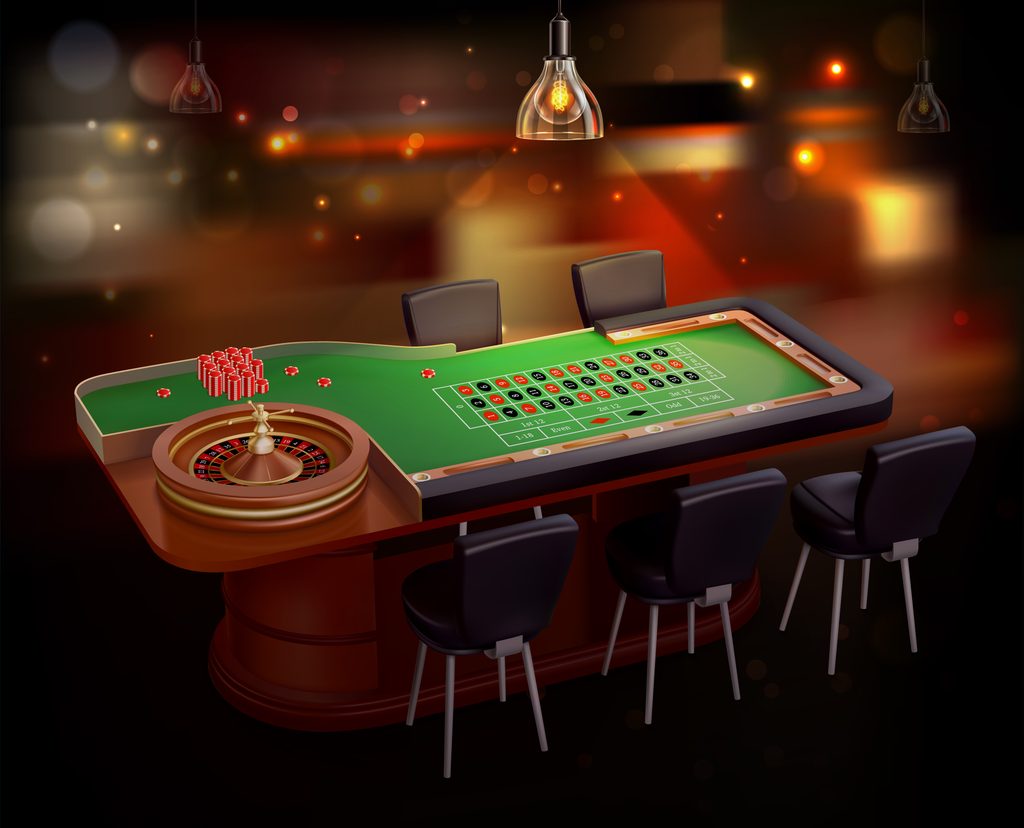
The roulette table is where you place your bets, and its layout is designed to show the different betting options available. While it may look complicated at first, the table can be divided into two main areas:
- Inside betting area: This section contains the individual numbers, along with combinations of numbers. Bets placed here usually cover fewer possible outcomes and therefore offer higher potential payouts.
- Outside betting area: This area includes bets such as red/black, odd/even, high/low, dozens, and columns. These bets cover a larger number of outcomes and generally offer lower payouts.
Think of the basic relationship this way:
Fewer numbers covered usually mean a higher potential payout, while more numbers covered generally mean a lower payout.
Once you understand this distinction, the French roulette table becomes much easier to read and the different betting options are easier to identify.
What Do French Roulette Table Terms Mean?
French roulette table terms identify familiar bets using French labels: Rouge means red, Noir means black, and Pair means even. Match these labels to the betting areas below if your table uses French rather than English wording.
These 9 labels describe the main outside betting options:
| French term or label | English equivalent | Numbers covered |
| Rouge | Red | The 18 red numbers. |
| Noir | Black | The 18 black numbers. |
| Pair | Even | The 18 even numbers from 2 to 36. |
| Impair | Odd | The 18 odd numbers from 1 to 35. |
| Manque | Low | Numbers 1–18. |
| Passe | High | Numbers 19–36. |
| Première / P / P12 | First dozen | Numbers 1–12. |
| Milieu or Moyenne / M / M12 | Second dozen | Numbers 13–24. |
| Dernière / D / D12 | Third dozen | Numbers 25–36. |
The wording and abbreviations vary by table layout. Zero is excluded from every betting group listed above, including Pair: although zero is mathematically even, roulette rules do not treat it as a winning result for an even-number bet.
French terms describe inside bets too. En plein means a straight-up bet on one number, à cheval means a split bet on two adjacent numbers, and carré means a corner bet covering four numbers.
How Do You Place Chips on a French Roulette Table?
Place chips on a number, dividing line, intersection, or labelled betting area to identify the outcomes your bet covers. Check the chip’s position if you want to cover multiple numbers, because placing it inside a number box creates a different bet from placing it on a boundary.
Use these 6 placement methods for the main bets:
- Place a straight-up bet inside one number box. A chip entirely within the 17 box covers only 17.
- Place a split bet on the line between two adjacent numbers. A chip on the shared line between 17 and 20 covers both numbers.
- Place a street bet at the outer edge of a three-number row. A chip beside the row containing 7, 8, and 9 covers those three numbers.
- Place a corner bet where four number boxes meet. A chip at the intersection of 10, 11, 13, and 14 covers all four numbers.
- Place a six-line bet at the outer edge where two adjacent rows meet. A chip between the rows containing 7–9 and 10–12 covers all six numbers.
- Place an outside bet inside its labelled area. A chip in Rouge covers red numbers, while a chip in the first-dozen area covers numbers 1–12.
At an online table, select a chip value, then click or tap the required betting position. Check your selected bets and total stake before betting closes.
The Role of Zero
Zero does not count as red, black, odd, even, low, or high when settling French roulette bets. Check the table’s rules if you want to confirm how La Partage or En Prison affects an even-money wager when zero lands.
A bet on red wins when the ball lands on a red number such as 23. If the ball lands on zero, the bet loses its full stake under standard rules without either special zero rule.
Each even-money category covers 18 numbers, while the wheel contains 37 pockets. The zero pocket creates the mathematical advantage for the casino. La Partage and En Prison change how qualifying bets are settled after zero; they do not change the number of pockets your bet covers.
Reading the Number Grid
The central part of the table contains numbers from 1 to 36.
They are arranged in three vertical columns, with numbers grouped into rows of three.
For example, one row contains 1, 2, and 3; another contains 4, 5, and 6, and so on.
The exact visual arrangement can vary slightly between tables, particularly between traditional French layouts and other roulette formats, but the basic betting concepts remain familiar.
The number grid is important because several different bets can be created from the relationships between these numbers.
You can bet on one number, two neighboring numbers, three numbers in a row, four numbers forming a block, or six numbers across two rows.
The Main Inside Bets
Inside bets are placed on or around the numbered section of the French roulette table. These wagers cover a smaller number of outcomes, so they generally offer higher payouts than outside bets.
Straight-Up
A straight-up bet covers a single number. For example, you could place a chip directly on 17.
If 17 is the winning number, the standard payout is 35 to 1. Because the wager covers only one of the 37 pockets, it offers a higher potential payout but a lower chance of winning than bets covering multiple numbers.
Split
A split bet covers two adjacent numbers. You place the chip on the line separating the two numbers.
For example, a split could cover 17 and 20. If either number wins, the standard payout is 17 to 1.
Street
A street bet covers three numbers arranged in a horizontal row.
For example, you could cover 7, 8, and 9 with a single street bet. If any of these three numbers wins, the standard payout is 11 to 1.
Corner
A corner bet covers four numbers that meet at a common corner.
For example, a corner can cover 10, 11, 13, and 14. If the winning number is one of those four, the standard payout is 8 to 1.
Six Line
A six-line bet, also called a six-number bet, covers six numbers across two adjacent rows.
For example, it can cover 7, 8, 9, 10, 11, and 12. If any of the six numbers wins, the standard payout is 5 to 1.
These inside bets give players different ways to combine numbers on the table. As more numbers are covered, the potential payout decreases, but the bet covers more possible winning outcomes.
Outside Bets: Simpler to Understand
Outside bets are placed on the sections outside the individual numbered pockets. They are often easier for beginners to understand because they cover larger groups of numbers rather than a single outcome or small combination.
The most common outside bets include:
- Red or black
- Odd or even
- 1–18 or 19–36
- First dozen, second dozen, or third dozen
- The three columns
Red/black, odd/even, and 1–18/19–36 are generally known as even-money bets because a winning wager pays 1 to 1.
For example, if you place $10 on black and the winning number is black, you receive $10 in profit, plus your original $10 stake. Your total return would therefore be $20.
There is one important exception to keep in mind: zero. The green 0 is neither red nor black, neither odd nor even, and does not fall within either the 1–18 or 19–36 range.
As a result, a winning outside bet is not guaranteed on every spin simply because it covers many numbers. The green 0 is included in the 37-pocket wheel and affects the probability of these bets.
What Are Call Bets and the Racetrack in French Roulette?
Call bets are named combinations of wagers covering sections of the roulette wheel, while the racetrack is an oval betting diagram that displays numbers in wheel order. Check the highlighted numbers and total stake if you want to confirm what a selected combination covers.
The racetrack differs from the rectangular number grid because it follows the physical wheel’s number sequence. Two numbers beside each other on the racetrack are not necessarily adjacent on the main betting layout.
There are 4 common named combinations:
| Bet name | Meaning | Numbers covered | Standard chip units |
| Voisins du Zéro | Neighbours of zero | 17 numbers in the wheel section containing zero | 9 |
| Tiers du Cylindre | Third of the wheel | 12 numbers in the section opposite zero | 6 |
| Orphelins | Orphans | The 8 numbers outside Voisins and Tiers | 5 |
| Jeu Zéro | Zero game | 7 numbers in a smaller section around zero | 4 |
Each combination distributes chips across standard inside bets, such as straight-up, split, trio, or corner bets. Chip units describe the total stake, not the number of outcomes covered. With a chip value of $1, a standard 9-unit Voisins du Zéro bet costs $9 and covers 17 numbers.
At online tables that support racetrack betting, selecting a named section places the corresponding combination. The return depends on which individual wagers win, so different winning numbers within the same combination do not necessarily produce the same payout.
How Does La Partage Work in French Roulette?
La Partage returns half your stake when zero lands on a qualifying even-money bet, while the other half is lost. Check the game’s rules before betting if you want to confirm that La Partage applies to red/black, odd/even, and low/high wagers.
A $20 bet on red has 3 possible outcomes under La Partage:
- Red wins: You receive $20 in profit plus your original $20 stake, giving a total return of $40.
- Black wins: You lose the full $20 stake.
- Zero lands: You receive $10 back and lose the remaining $10.
On a standard single-zero wheel, La Partage reduces the house edge on qualifying even-money bets from approximately 2.70% to 1.35%. It does not change the probability of red, black, or zero appearing, and it does not apply to straight-up bets, dozens, or columns.
What About En Prison?
Another rule you may encounter is called En Prison.
The idea is similar in that it can change what happens to an eligible even-money bet when zero appears.
Instead of immediately losing the wager, the bet may remain on the table for another spin. If the same bet wins on that following spin, the original stake is generally returned rather than producing a normal profit.
The exact treatment of another zero or other situations depends on the specific game rules.
That’s why checking the table information is important, particularly when playing an online version.
Understanding Payouts Without Memorizing Everything
You don’t need to memorize every payout before your first game.
A useful way to understand the structure is:
| Bet | Number Covered | Typical Payout |
| Straight-up | 1 | 35 to 1 |
| Split | 2 | 17 to 1 |
| Street | 3 | 11 to 1 |
| Corner | 4 | 8 to 1 |
| Six line | 6 | 5 to 1 |
| Dozen | 12 | 2 to 1 |
| Column | 12 | 2 to 1 |
| Red/Black | 18 | 1 to 1 |
| Odd/Even | 18 | 1 to 1 |
| High/Low | 18 | 1 to 1 |
The payout tells you how much profit a winning wager produces. It does not mean that the bet is more likely to win simply because its payout is higher.
For example, a straight-up bet offers a much larger payout than red/black because it covers only one number.
French Roulette Online: What Should You Check?
The online version can look almost identical to a traditional casino table, but the rules can vary between games.
Before playing roulette online, take a moment to check the game information.
Look for:
- Number of zero pockets
- Available betting options
- Payouts
- La Partage availability
- En Prison availability
- Minimum and maximum bet limits
- Live dealer or automated format
- Casino licensing and terms
A game described as French roulette should still be checked carefully. The exact rules matter more than the name displayed in the game lobby.
Live-dealer French roulette can provide a more traditional experience because a real dealer spins the physical wheel, while automated games use digital or computer-controlled presentations.
Does the Wheel Have a Pattern?
This is one of the most common questions from beginners.
The French roulette wheel has a specific number arrangement, but that does not mean you can use the sequence of numbers to reliably predict the next winning pocket.
Each spin is a separate event.
If black appears several times consecutively, that does not make red automatically “due.” Likewise, a number that has not appeared for many spins is not guaranteed to appear next.
Understanding this can help you avoid one of the most common mistakes in roulette: assuming previous results determine future spins.
A Few Practical Tips Before You Play
Roulette is a game of chance, and no betting system can guarantee a profit. The most practical approach is to understand the rules, set clear limits, and keep your play within those boundaries.
- Set a budget first: Decide how much you are comfortable spending before you begin. Treat this as your limit for the session and avoid increasing it to recover previous losses.
- Learn the rules before betting: Take time to understand the table layout, betting options, payouts, and how the green 0 affects different wagers.
- Start with simple bets: Straightforward outside bets can be easier to follow while you are learning the table. You can explore more complex bets once you understand how the layout works.
- Don’t chase losses: A series of losing spins does not make a particular number or bet more likely to win on the next spin. Each spin is a separate outcome.
- Check the minimum bet: Look at the minimum and maximum stakes before choosing a table. This is especially useful when comparing different online roulette games.
- Take regular breaks: Roulette can move quickly, with one spin following another. Taking a break gives you an opportunity to check how much you have spent and decide whether you want to continue.
These habits are not strategies for overcoming the house edge. They are simple ways to keep your play understandable, budget-conscious, and focused on roulette as a game of chance.
French Roulette vs. Other Roulette Games
The easiest way to distinguish French roulette from other versions is to look at the wheel and the rules attached to it. French roulette normally uses a single green 0, while American roulette has both 0 and 00. European roulette also uses a single zero, so its basic wheel structure is similar to French roulette.
However, the games can differ in their table layouts, terminology, and special rules. French roulette is particularly associated with rules such as La Partage, which can affect certain even-money bets when the ball lands on zero.
| Feature | French Roulette | European Roulette | American Roulette |
| Green pockets | 1: 0 | 1: 0 | 2: 0 and 00 |
| Total pockets | 37 | 37 | 38 |
| Red numbers | 18 | 18 | 18 |
| Black numbers | 18 | 18 | 18 |
| Zero rule | Often includes La Partage | Varies by table | No La Partage on standard rules |
| Typical layout | French-style layout | European-style layout | American-style layout |
| House edge on standard even-money bets | Can be lower when La Partage applies | Typically 2.70% | Typically 5.26% |
The single zero means French and European roulette have the same 37-pocket wheel structure, while the additional 00 on an American roulette wheel increases the total to 38 pockets.
Therefore, when comparing roulette games, don’t rely only on the game title. Check the number of pockets, zero rules, table layout, and any special rules that apply to your bets.
Final Thoughts
The French roulette game becomes much easier to understand once you know how the wheel and table work together. The wheel determines the winning pocket, while the table provides different ways to cover possible outcomes. Inside bets focus on individual numbers or smaller groups, while outside bets cover broader categories.
If you want to Play French Roulette, start by learning the table and understanding how each type of bet works rather than searching for a complicated betting system. Pay particular attention to the single-zero wheel and check whether special rules such as La Partage or En Prison apply to the table.
If you decide to try roulette online, read the game’s rules before placing your first bet. Differences in zero rules, payouts, minimum stakes, and table conditions can affect how the game operates.
Most importantly, roulette remains a game of chance. Understanding the wheel, table, bets, and probabilities can help you make more informed decisions, but it does not eliminate the mathematical house edge. Set a sensible budget, understand the rules, and approach roulette as entertainment rather than as a guaranteed way to make money.
Responsible Gambling
Roulette is a game of chance, and there is no guaranteed way to predict or control the outcome of a spin. Set a budget before playing, stay within your limits, and never chase losses. Taking regular breaks can also help you keep track of how much time and money you are spending.
If gambling becomes difficult to control or starts causing problems, support is available. In the U.S., the National Council on Problem Gambling provides information, self-assessment tools, and access to the National Problem Gambling Helpline.
You can also visit the National Council on Problem Gambling for responsible gambling information and support resources.
For readers in the UK, GamCare provides free, confidential gambling support through its National Gambling Helpline, live chat, WhatsApp, and other services.
Disclaimer
This article is provided for general informational and educational purposes only. It does not guarantee winnings or provide financial advice. Roulette involves risk, and players should understand the rules, odds, and applicable laws before participating.
Always check the terms, conditions, payouts, betting limits, and responsible gambling tools offered by the specific platform or game you use.
Frequently Asked Questions
What makes French roulette different from other roulette versions?
French roulette uses a single-zero wheel with 37 pockets and is commonly associated with French table layouts and rules such as La Partage and En Prison.
How many pockets are on a French roulette wheel?
A standard French roulette wheel has 37 pockets: numbers 1 through 36 and one green zero. The zero is separate from both red and black numbers.
What are inside and outside bets?
Inside bets cover individual numbers or smaller groups, such as straight-up and split bets. Outside bets cover broader categories, including red/black, odd/even, dozens, and columns.
How does La Partage work?
La Partage can apply to qualifying even-money bets. If the ball lands on zero, half of the original stake is returned, while the remaining half is lost.
Can I play French roulette online?
Yes, French roulette is available online through automated and live-dealer formats. Always check the table’s rules, payouts, betting limits, and applicable zero rules before playing.