Roulette looks simple when you first see the table. You choose a number, select a color, or place a chip on a group of numbers and wait for the wheel to stop. However, there is another part of the game that can make betting combinations easier to understand: the roulette racetrack layout.
The racetrack is especially useful for understanding bets based on the physical position of numbers around the wheel. Instead of selecting numbers because they appear next to one another on the betting grid, you can explore groups of pockets that sit close together on the actual wheel. These wagers are commonly known as call bets or announced bets.
If you are learning online roulette rules and bets, understanding the racetrack can help you recognize additional betting options without confusing them with standard table bets. This guide explains how the racetrack works, what its main sections represent, how payouts are calculated, and what to check before trying these bets in roulette online.
Roulette Racetrack Layout Explained: Call Bets, Wheel Sections and PayoutsThe roulette racetrack shows wheel-number order, helping players understand call bets and neighbouring pockets clearly. Voisins du Zéro, Tiers, Orphelins, and neighbours bets cover sections or combinations of wheel pockets. Payouts depend on the winning wager, so call bets can return amounts across covered numbers. Racetrack bets increase coverage, not certainty; standard single-zero roulette generally carries a 2.70% house edge. Online availability and wheel rules vary, so check instructions, stake, payouts, and limits before playing. |
What Is the Roulette Racetrack Layout?
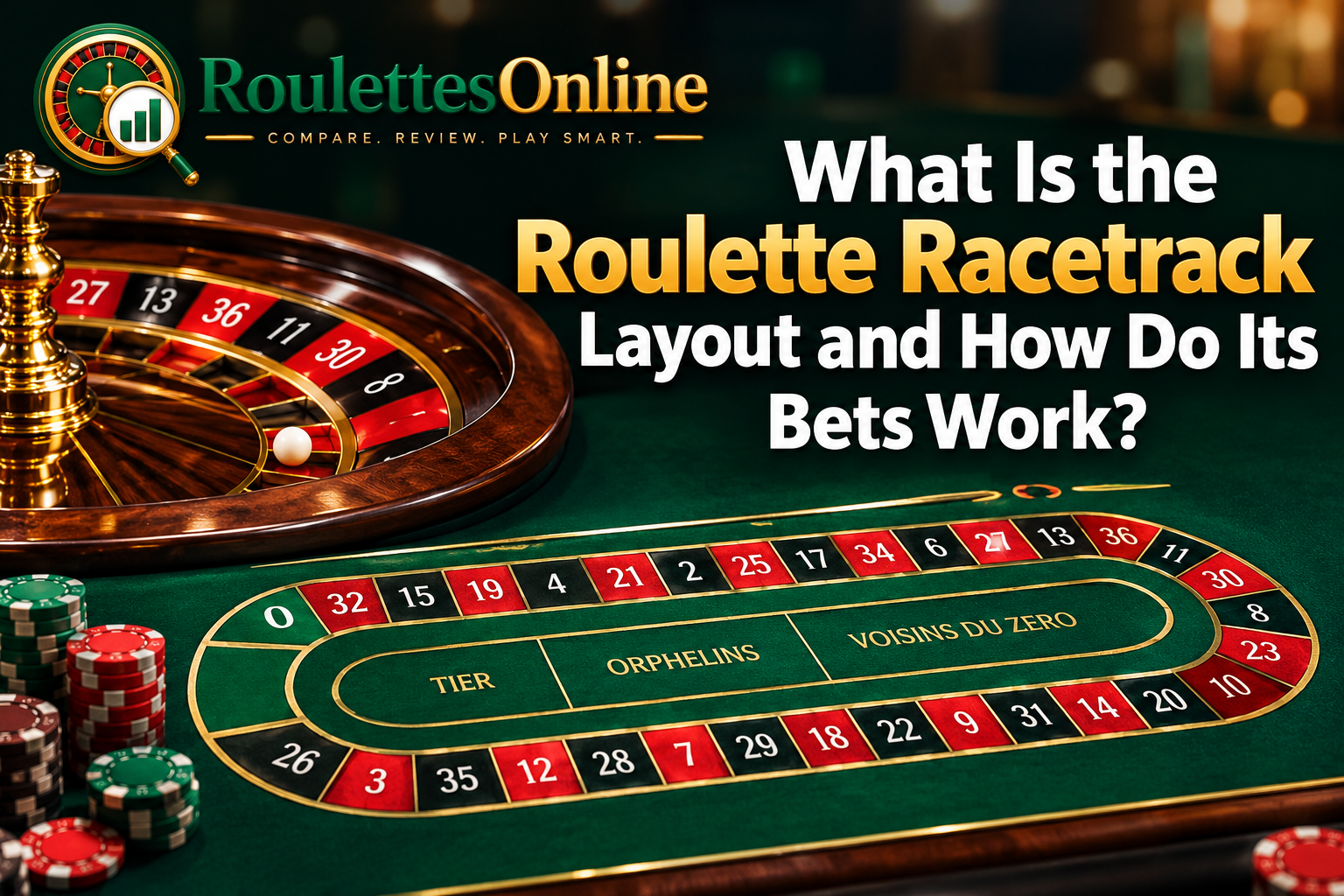
The roulette racetrack is an oval-shaped diagram that displays numbers in the same order as the pockets around the physical roulette wheel. It is usually positioned near the main betting grid on tables that support racetrack betting.
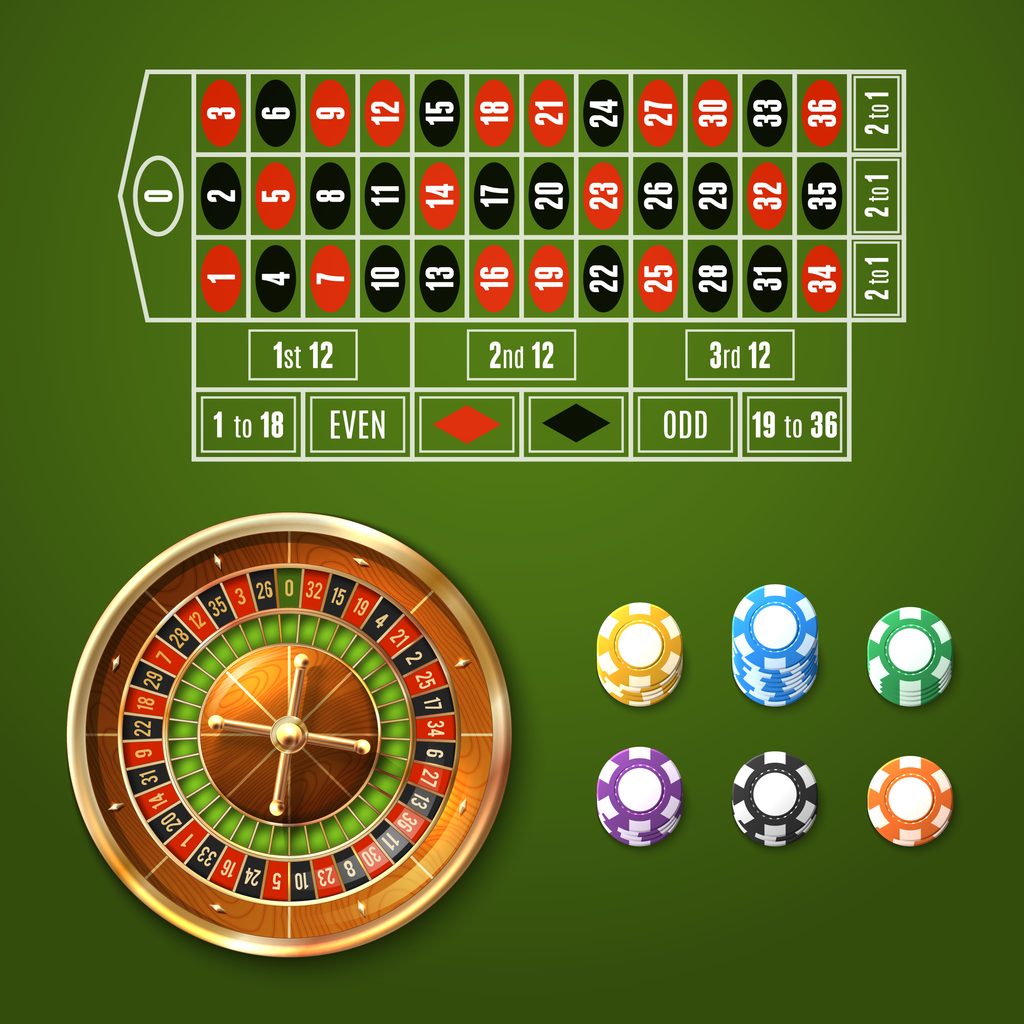
The key difference is how the numbers are arranged. On a standard roulette betting grid, numbers appear in rows and columns, generally in numerical order. On the racetrack, they follow the wheel’s sequence. Numbers that look far apart on the main grid may sit next to each other on the wheel.
This distinction matters because some roulette wagers are designed to cover neighbouring pockets or specific sections of the wheel.
For example, a player interested in the numbers around zero can use the racetrack to identify that section without searching for each number individually across the main grid. Depending on the casino or game provider, a player may select a named betting sector directly or place the required individual bets.
The racetrack does not predict where the ball will land. It is simply another way to organize and place particular wagers.
How Does the Racetrack Differ From the Standard Roulette Table?
The standard betting grid and the racetrack serve different purposes. Understanding the difference makes the game easier to follow, particularly if you are new to wheel-based betting.
The main grid contains the familiar number squares from 0 to 36 on a European-style table. It also includes betting areas for red or black, odd or even, high or low, dozens, and columns.
The racetrack, by comparison, follows the order of pockets around the wheel. It is primarily useful for call bets, including Voisins du Zéro, Tiers du Cylindre, Orphelins, and individual neighbours bets.
Consider the number 32. On a single-zero roulette wheel, 32 sits next to 0 and 15 in the physical wheel sequence. These relationships are easy to recognize on the racetrack, even though those numbers do not appear together as a group on the main grid.
The difference is straightforward: standard table bets are based on positions or groups on the betting layout, while racetrack bets are based on relationships between pockets around the wheel.
Understanding European Roulette Wheel Layout
The European roulette wheel layout is particularly relevant when learning racetrack bets because the standard European wheel contains 37 pockets: numbers 1 through 36 and a single green zero.
Although the betting grid displays the numbers in numerical order, the wheel follows a fixed sequence. Starting at zero and moving clockwise, the sequence is:
0, 32, 15, 19, 4, 21, 2, 25, 17, 34, 6, 27, 13, 36, 11, 30, 8, 23, 10, 5, 24, 16, 33, 1, 20, 14, 31, 9, 22, 18, 29, 7, 28, 12, 35, 3, 26.
The racetrack reproduces this wheel order, helping players see which numbers sit next to one another.
The same single-zero wheel sequence is used in standard European and French roulette. American roulette is different because it normally has both 0 and 00, creating 38 pockets and a different wheel arrangement. Therefore, do not assume that every racetrack betting combination applies to every roulette variant.
The wheel’s colours are also worth understanding. On a European wheel, 18 numbered pockets are red, 18 are black, and zero is green. The colour pattern does not change the order of the wheel or make any pocket more likely to win.
Four Roulette Racetrack Bets Explained
The racetrack is most closely associated with call bets. These wagers cover defined sections of the wheel or a selected group of neighbouring numbers. Their availability and exact implementation depend on the table.
1. Voisins du Zéro
Voisins du Zéro translates roughly as “neighbours of zero.” It covers 17 pockets in the section of a single-zero wheel surrounding zero.
The covered numbers are:
22, 18, 29, 7, 28, 12, 35, 3, 26, 0, 32, 15, 19, 4, 21, 2, and 25.
This is one of the largest standard racetrack bets. Its traditional placement uses nine chips distributed across a combination of splits, a three-number bet, and a corner bet.
The advantage of the arrangement is convenience: a player can cover a defined section of the wheel using a recognized combination instead of building the same set of wagers manually. However, the total stake is spread across several bets, and the amount returned depends on which covered number wins and which individual wager includes it.
2. Tiers du Cylindre
Tiers du Cylindre is often shortened to Tiers and means approximately “third of the wheel.” It covers 12 numbers on the side of the single-zero wheel opposite the zero area.
Its numbers are:
27, 13, 36, 11, 30, 8, 23, 10, 5, 24, 16, and 33.
The traditional Tiers combination uses six chips placed on six split bets. Each split covers two numbers, so the arrangement includes all 12 numbers in that sector.
This option may appeal to someone who wants to understand a specific wheel section without selecting each number separately. As with every call bet, covering a group of pockets does not guarantee a return on every spin.
3. Orphelins
Orphelins means “orphans” in French. These are eight pockets that sit in two separate sections between the Voisins du Zéro and Tiers sectors.
The numbers are:
1, 6, 9, 14, 17, 20, 31, and 34.
A traditional Orphelins bet uses five chips: one straight-up bet on 1 and four split bets covering pairs of numbers.
Because these pockets occupy two separate areas of the wheel, they are not one continuous section. The racetrack helps explain why the group belongs together as a named betting combination even though its numbers appear in different places on the standard betting grid.
4. Neighbours Bets
Unlike the three predefined sectors, a neighbours bet can be built around a number of your choice. It typically covers a central number and a specified number of pockets on either side of it.
For example, a bet on five neighbours usually covers five pockets in total: the selected number, two wheel neighbours on one side, and two on the other.
The total stake depends on the number of pockets covered and the chip value assigned to each individual wager. A wider neighbours bet covers more numbers but also requires a larger total stake.
The important point is that “neighbour” refers to physical proximity on the wheel, not numerical closeness. The number 32, for instance, has 0 and 15 immediately beside it on a standard European wheel.
How Do Roulette Racetrack Bets Pay Out?
Roulette payouts depend on the individual wager that wins, not simply on how many numbers a racetrack combination covers. This is an important distinction when comparing different types of roulette bets.
On a standard single-zero roulette table, common payouts include:
- Straight-up bet: 35 to 1
- Split bet: 17 to 1
- Street bet: 11 to 1
- Corner bet: 8 to 1
- Six-line bet: 5 to 1
- Dozen or column bet: 2 to 1
- Even-money bet: 1 to 1
These are standard net payout odds; the original winning stake is generally returned as well.
Call bets combine different wager types, so their returns are not necessarily identical for every number within the covered section. A winning split pays according to split-bet odds, while a winning straight-up component pays according to straight-up odds. The result also depends on how many chips were placed on that component.
For example, imagine a traditional Orphelins combination with one chip on number 1 and one chip on each of four splits. If number 1 wins, the straight-up component pays 35 to 1, while the other four chips lose. The net result is calculated after accounting for the entire five-chip stake.
This is why reading roulette payouts explained in the context of the individual bet is more useful than assuming every covered number produces the same return.
Do Racetrack Bets Offer Better Odds?
Racetrack bets can make it easier to cover multiple pockets, but they do not automatically improve the mathematical odds of roulette.
On a standard European wheel, a single-number bet has a probability of 1 in 37 of winning. A group covering 12 distinct numbers has a probability of 12 in 37 of hitting one of those numbers, assuming each pocket is covered and every pocket is equally likely.
That higher hit probability does not necessarily mean a better overall return. A call bet divides the stake across several individual wagers, and the payout varies according to which component wins.
Standard European roulette bets generally carry a house edge of about 2.70%. French roulette may offer special rules such as La Partage or En Prison on qualifying even-money bets, but those rules do not automatically apply to every racetrack wager.
It is therefore useful to distinguish between the chance of hitting a covered number, the payout on the winning component, and the expected return over many spins. These are related but different measures.
How to Use Racetrack in Roulette Online
Many digital roulette games display the racetrack alongside the standard betting grid, while others provide call bets through a separate menu or do not offer them at all.
If you want to try this feature in roulette online, start by checking the rules or help section for the specific table. Look for the available racetrack sectors, the chip combinations used, the minimum stake, and the maximum betting limits.
Next, identify whether the game uses a European, French, or American wheel. The standard Voisins du Zéro, Tiers du Cylindre, and Orphelins combinations are associated with the single-zero wheel sequence, so the game rules matter.
If the interface supports named call bets, select the desired option and check the chips placed on the betting grid before the betting timer closes. If you need to place the bets manually, confirm that the individual chip positions match the intended combination.
A demo or free-play table can be useful for learning the interface without risking money. When playing for real money, use only a permitted and appropriately licensed service, set a spending limit, and remember that no racetrack selection can predict the next result.
Common Mistakes to Avoid
Confusing wheel neighbours with consecutive numbers: Two numbers that are numerically close are not necessarily adjacent on the wheel.
Assuming every table offers call bets: Some roulette games display a racetrack but do not provide every named betting option.
Ignoring the total stake: A call bet can use several chips at once. Check the full cost rather than focusing only on the chip value of one component.
Expecting a guaranteed profit: Covering more pockets increases the chance of hitting one of them, but it does not eliminate losing outcomes or the house edge.
Mixing up roulette variants: The number sequence and available rules may differ between European, French, and American roulette.
Final Thoughts
The roulette racetrack layout is a practical way to understand the physical order of wheel numbers and the call bets associated with them. Voisins du Zéro, Tiers du Cylindre, Orphelins, and neighbours bets each cover particular pockets, but they use different combinations and may return different amounts depending on the winning component.
Once you understand how the racetrack differs from the standard grid, the wider range of online roulette rules and bets becomes easier to follow. Focus on learning the wheel sequence, checking the table’s rules, and understanding the full stake and payout before placing a wager.
Responsible Gambling
Roulette should be treated as entertainment, not a reliable way to make money. Set a budget before playing, never wager money needed for essential expenses, and avoid chasing losses. Take breaks, understand the rules and payouts, and stop if playing becomes stressful or difficult to control. Use deposit limits, time-outs or self-exclusion tools when needed. Only participate where legally permitted and if you meet the applicable age requirements.
For additional information and support, visit GambleAware, GamCare, or Gambling Therapy. US readers can also access resources through the National Council on Problem Gambling.
Disclaimer
This article is intended for informational and educational purposes only. It explains the roulette racetrack layout, common call bets, and their general payout structure; it does not guarantee winnings or predict future results. Rules, betting options, and payouts may vary by roulette variant and game provider. Check the specific table rules before playing and follow the laws and regulations applicable in your location.
Frequently Asked Questions
1. What is the racetrack in roulette?
The racetrack is an oval diagram that displays roulette numbers in the order they appear around the physical wheel. It is mainly used to understand and place wheel-based call bets.
2. What are the main roulette racetrack bets?
The main named sectors are Voisins du Zéro, Tiers du Cylindre, and Orphelins. Neighbours bets are also common and let players cover a chosen number and nearby pockets.
3. Are racetrack bets available in online roulette?
Some online roulette games offer racetrack betting or named call bets, while others do not. Check the specific game’s interface and rules before playing.
4. Do racetrack bets have better odds than regular roulette bets?
Not automatically. Covering more numbers raises the chance that one of them will hit, but the total stake and payouts determine the overall result. Standard single-zero roulette bets generally retain a house edge of about 2.70%.
5. Is the racetrack the same on European and French roulette tables?
European and French roulette typically use the same 37-pocket, single-zero wheel sequence. French tables may offer additional rules, but the availability and presentation of racetrack bets can vary by game and casino.