
Every roulette bet comes with a mathematical advantage built into the game, and that advantage belongs to the casino. You might win several spins in a row, pick the right colour, or hit a single number with a large payout, but none of those results removes the underlying house edge.
The roulette house edge explains why casinos can offer winning payouts while still maintaining an advantage over time. It also helps explain why the same $10 wager can have a different expected outcome depending on the wheel you’re playing.
Understanding the house edge isn’t about predicting the next number. It’s about knowing how much the game is mathematically expected to cost, why certain roulette bets are less favourable than others, and which rules make a genuine difference.
Key Takeaways About the Roulette House EdgeEuropean roulette offers a 2.70% house edge, making it mathematically more favourable than standard American roulette. American roulette has a 5.26% house edge because its additional green zero increases losing outcomes without improving standard payouts. French roulette with La Partage reduces the house edge to approximately 1.35% on eligible even-money wagers. The house edge applies to cumulative wagering, meaning repeated spins increase theoretical expected losses over time. Betting systems cannot eliminate the casino’s mathematical advantage because every spin remains independent of previous results. |
What Does the House Edge Actually Mean in Roulette?
The house edge is the percentage of money wagered that a casino mathematically expects to retain over a large number of bets.
For example, European roulette has a standard house edge of 2.70%. This means that for every $100 wagered, the theoretical average loss is approximately $2.70.
American roulette has a higher house edge of 5.26%, meaning the expected loss increases to around $5.26 per $100 wagered.
These percentages don’t represent guaranteed losses.
You could place a $100 bet, win immediately, and finish ahead. Another player could lose the entire amount on the first spin.
The house edge describes long-term mathematical expectations rather than individual outcomes. It also applies to the total amount wagered, not simply the money deposited into your account.
Where Does the Casino’s Advantage Come From?
The advantage comes from the relationship between the numbers on the wheel and the payouts offered for winning bets.
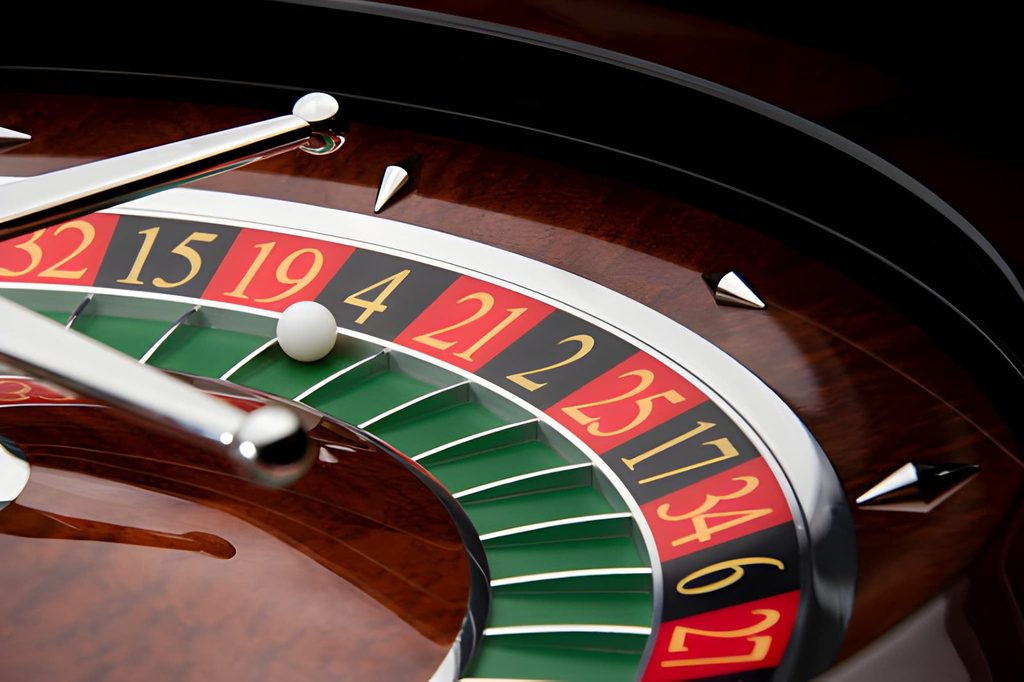
Consider a standard European roulette wheel. It contains 37 pockets: numbers 1 through 36 and one green zero.
A straight-up bet on one number pays 35:1. However, with 37 possible outcomes, the true odds against landing on your selected number are 36:1.
That difference creates the house edge.
The casino pays slightly less than the mathematically fair payout, allowing it to maintain an expected advantage across repeated wagers.
American roulette adds another green pocket marked 00, increasing the wheel to 38 pockets while keeping standard payouts unchanged.
Understanding how many numbers are on a roulette wheel is important because each additional pocket changes the probability of winning without necessarily changing the payout.
How Is the Roulette House Edge Calculated?
The calculation becomes easier when you understand that standard roulette payouts are based on 36 numbered outcomes, while the wheel includes additional zero pockets.
For standard roulette bets, the basic formula is:
House Edge = (Number of Zero Pockets ÷ Total Wheel Pockets) × 100
European Roulette Calculation
A European wheel contains one zero and 37 total pockets.
House edge = (1 ÷ 37) × 100
Result: 2.70%
American Roulette Calculation
An American wheel contains two zeros and 38 total pockets.
House edge = (2 ÷ 38) × 100
Result: 5.26%
The difference between European and American roulette comes largely from these additional losing outcomes. Both versions offer similar standard payouts, but American roulette gives the casino a greater mathematical advantage.
These calculations apply to conventional wagers. Special betting options and modified game rules may produce different house edges.
How Much Does the House Edge Cost Over Multiple Spins?
A single roulette spin doesn’t reveal much about the house edge. Its effect becomes easier to understand when you consider repeated wagering.
Suppose someone places a $10 bet on every spin for 100 rounds.
Their cumulative wagering reaches $1,000, even if they began with a smaller bankroll and reused money returned from winning bets.
On standard European roulette, the theoretical expected loss is approximately $27.
On standard American roulette, the expected loss is around $52.63.
The difference is approximately $25.60 over the same wagering amount.
Now imagine the total wagering increases to $5,000.
The theoretical expected losses become approximately $135.14 on European roulette and $263.16 on American roulette.
French roulette with La Partage has a lower expected loss of approximately $67.57 for $5,000 wagered on eligible even-money bets.
These figures aren’t guaranteed session results. Actual outcomes can vary considerably, especially across a relatively small number of spins.
The main point is that the house edge applies to cumulative wagering, including winnings that are placed back into play.
Does the House Edge Change Between Different Roulette Bets?
This is where many players get confused.
A straight-up bet on one number pays 35:1, while a red or black bet pays just 1:1.
It might seem that one has a greater house edge than the other, but that’s generally not the case.
On a standard European wheel, most conventional bets carry the same 2.70% house edge.
That includes straight-up bets, splits, streets, corners, dozens, columns, and even-money wagers.
What changes is the probability of winning and the amount paid when successful.
For example, a straight-up bet has a 1-in-37 chance of winning on a European wheel, while red covers 18 of the 37 outcomes.
Both have the same underlying house edge because roulette payouts are structured around the number of pockets each wager covers.
The distinction matters because a higher payout doesn’t necessarily mean better mathematical value.
Why the Roulette Five-Number Bet Is an Exception
Most standard American roulette bets carry a house edge of 5.26%, but one particular wager has an even higher mathematical disadvantage.
The roulette five-number bet, also called the basket bet or top-line bet, covers five numbers: 0, 00, 1, 2, and 3.
It pays 6:1 when any of those numbers wins.
Since American roulette has 38 pockets, the probability of winning is:
5 ÷ 38 × 100 = 13.16%
However, the 6:1 payout is less favourable than the true odds would justify.
As a result, the roulette five-number bet has a house edge of approximately 7.89%, making it less favourable mathematically than most other standard American roulette wagers.
For every $100 wagered on this bet over the long run, the theoretical expected loss is about $7.89.
This shows why players shouldn’t assume that every wager on the same roulette wheel offers identical mathematical value.
Why Winning Probability and House Edge Aren’t the Same Thing
When comparing roulette odds, it’s important to separate the chance of winning from the expected value of a wager.
A red bet on a European wheel has an approximately 48.65% probability of winning.
A straight-up bet has only a 2.70% probability of winning.
Yet both carry the same standard house edge.
The reason is that their payouts reflect the number of outcomes covered.
An even-money bet wins relatively frequently but pays less. A straight-up bet wins much less often but offers a larger payout.
Understanding roulette odds and your real chances of winning helps explain why a wager with a greater winning probability doesn’t automatically have a smaller house edge.
The house edge considers both the probability of winning and the profit paid when that happens.
Can French Roulette Rules Reduce the House Edge?
Yes, and this is one of the more meaningful differences between roulette variations.
Standard French roulette uses a single-zero wheel, giving it the same basic 2.70% house edge as European roulette.
However, certain French roulette rules provide additional protection for eligible even-money wagers.
La Partage
Under La Partage, when the ball lands on zero, you lose only half your stake on an eligible even-money bet.
Suppose you wager $20 on black.
If zero appears, you receive $10 back rather than losing the entire $20.
This reduces the house edge on qualifying bets to approximately 1.35%.
En Prison
En Prison allows an eligible even-money bet to remain in play when zero appears.
Under a common version, if the bet wins on the following spin, your original stake is returned without profit. If it loses, the stake is forfeited.
The treatment of repeated zeros can vary by table.
These protections generally apply to red or black, odd or even, and high or low wagers. Understanding French roulette bets, rules, and odds is particularly useful when comparing games because not every single-zero table provides these additional protections.
House Edge vs RTP: Are They Different?
You may also come across the term Return to Player, commonly shortened to RTP.
RTP represents the theoretical percentage of total wagers returned to players over time.
The house edge represents the remaining percentage retained by the casino on average.
For a standard game:
RTP = 100% − House Edge
European roulette has a theoretical RTP of approximately 97.30%.
American roulette has an RTP of approximately 94.74%.
For eligible even-money bets under La Partage, the RTP increases to approximately 98.65%.
These percentages describe long-term averages across repeated wagers.
A 97.30% RTP doesn’t mean that a player who deposits $100 is guaranteed to receive $97.30 back.
Actual outcomes depend on individual spins and the total amount wagered.
Does the House Edge Work Differently in Roulette Online?
The mathematical principles remain the same when playing roulette online, provided the game follows standard wheel rules and payouts.
A digital European roulette game with 37 equally likely pockets and conventional payouts has the same standard house edge as a physical European roulette table.
The same applies to American roulette.
However, online games may include special features, multipliers, bonus rounds, or modified payout structures.
These changes can affect the overall RTP and house edge.
Before playing, check the wheel type, payout information, minimum stakes, and game rules.
Also consider the speed of play.
Automated roulette may allow many spins within a short period. More spins can mean more cumulative wagering, increasing the theoretical expected loss even when individual stakes remain small.
Can Betting Strategies Overcome the House Edge?
No betting progression can remove the underlying mathematical advantage in standard roulette.
Systems such as Martingale, Fibonacci, and D’Alembert change wager sizes based on previous results.
They don’t change the probability of where the ball will land.
For example, if red appears seven times consecutively, black doesn’t become more likely on the next fair spin.
Similarly, doubling a wager after several losses doesn’t improve the odds. It only increases the amount of money exposed to risk.
Maintaining a sensible roulette bankroll management plan can help control spending through predetermined stakes, deposit limits, and stopping points, although it cannot change the house edge.
The purpose is to manage financial exposure, not to guarantee winnings.
What Should You Check Before Choosing a Roulette Table?
Rather than trying to identify a lucky number or betting pattern, focus on the conditions of the game.
First, check whether the wheel contains one zero or two. A standard single-zero wheel offers a lower house edge than a double-zero wheel.
Next, look at any special rules. French roulette tables offering La Partage may reduce the mathematical disadvantage on eligible roulette even-money bets, such as red, black, odd, and even.
Check the published RTP and confirm that the payouts follow the rules you expect.
Finally, consider the table limits and speed of play. A lower house edge is useful for comparing games, but it doesn’t make roulette a reliable source of income or eliminate the possibility of substantial losses.
Understanding the Cost Behind Every Spin
The roulette house edge is more than a percentage printed in a game’s rules. It explains the relationship between winning probabilities, payouts, and the casino’s mathematical advantage.
European roulette has a standard house edge of 2.70%, American roulette increases it to 5.26%, and certain French roulette rules can reduce it to approximately 1.35% on eligible even-money wagers.
Understanding these differences helps you compare games without relying on betting myths or previous results.
The house edge won’t tell you whether your next bet will win. It tells you what repeated wagering is expected to cost over time, making it one of the most useful concepts to understand before playing roulette.
Responsible Gambling
Roulette should be treated as entertainment rather than a way to make money. Set a fixed spending limit before playing and never wager more than you can afford to lose. Avoid chasing losses, increasing stakes to recover money, or relying on betting systems to guarantee results. Take regular breaks and stop playing whenever it stops being enjoyable. If gambling becomes difficult to control, seek confidential support through the National Council on Problem Gambling or visit ResponsiblePlay.org for guidance on safer gambling habits, recognising warning signs, and accessing support.
Disclaimer
This article is intended for informational and educational purposes only. Roulette outcomes are random, and the house edge and RTP figures discussed are based on standard game rules and conventional payouts. Actual results may vary depending on the specific game, betting rules, and applicable variations. No betting strategy guarantees winnings or eliminates the casino’s mathematical advantage. Always review the game rules, understand the risks involved, and check the gambling regulations applicable in your location before playing.
Frequently Asked Questions
1. What is the house edge in roulette?
The roulette house edge is the casino’s mathematical advantage expressed as a percentage of total wagers. It represents the theoretical amount the casino expects to retain over many bets, not a guaranteed loss on each spin.
2. What is the lowest standard roulette house edge?
French roulette with La Partage offers approximately 1.35% on eligible even-money bets. Standard European roulette has a 2.70% house edge, while American roulette has a 5.26% edge.
3. Does betting on red or black reduce the house edge?
No. Under standard European roulette rules, red and black carry the same 2.70% house edge as most other conventional wagers. They have a higher probability of winning an individual spin, but their payouts are smaller.
4. Why does American roulette have a higher house edge?
American roulette includes two green zero pockets instead of one. The additional pocket increases the number of possible losing outcomes for many wagers without increasing their standard payouts.
5. Which roulette bet has the highest house edge?
Among conventional American roulette wagers, the five-number basket bet has a particularly high house edge of approximately 7.89%. It covers 0, 00, 1, 2, and 3 and pays 6:1.
6. Can a roulette betting system change the house edge?
No. Betting systems can change how much you wager, but they cannot alter the probabilities or standard payouts of a fair roulette game. Increasing bets after losses may also increase financial risk.
7. Is the house edge the same as the chance of losing?
No. The probability of losing describes how likely a particular bet is to fail on one spin. The house edge measures the average mathematical disadvantage after considering the probability of winning and the payout.
8. Does playing longer increase the house edge?
Playing longer doesn’t change the house-edge percentage. However, additional spins increase cumulative wagering, which increases the theoretical expected total loss.