

Roulette is one of the most recognizable casino games in the world. The rules are easy to understand, the wheel is visually appealing, and players can choose from a wide variety of betting options. However, not all roulette wheels are the same. Two of the most popular versions are European roulette and American roulette.
At first glance, these games may look almost identical. Both use numbers from 1 to 36, both have red and black pockets, and both offer familiar bets such as red or black, odd or even, and individual numbers. The biggest difference is the number of green zero pockets on the wheel.
European roulette has a single zero, while American roulette has both zero and double zero. That additional pocket has an important effect on the odds and gives the casino a higher mathematical advantage.
If you are new to roulette or trying to decide which version to play, understanding this difference can help you make a more informed choice. In this guide, we will compare European roulette vs American roulette, explain their rules, betting options, payouts, odds, house edge, and gameplay, and answer some common questions.
What Is European Roulette?
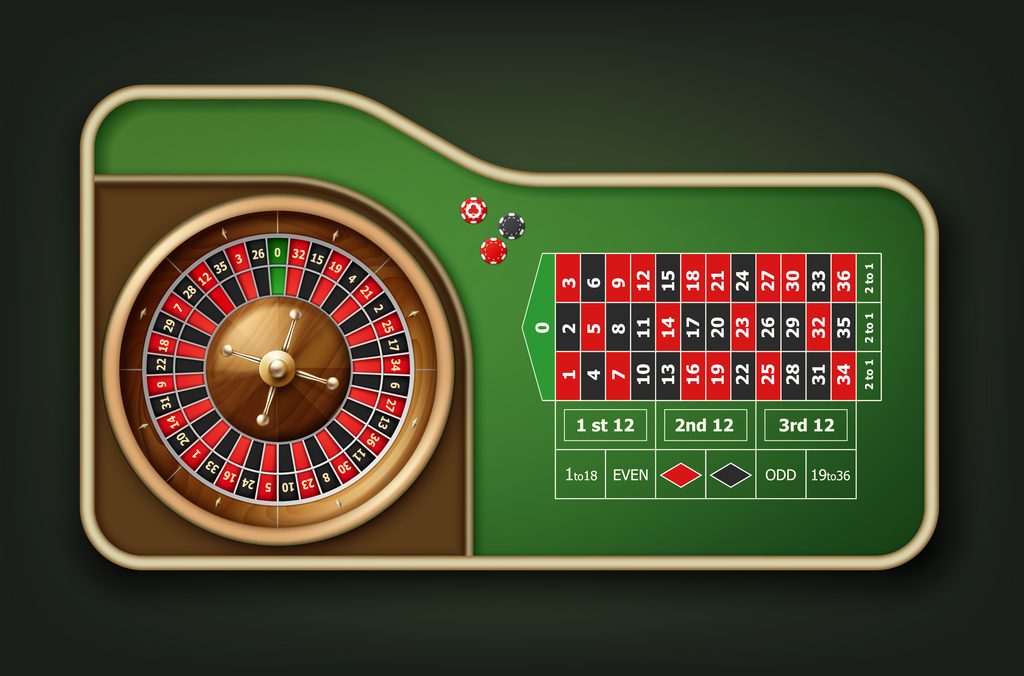
European roulette, also commonly called single-zero roulette, uses a wheel containing 37 pockets.
These pockets consist of:
- Numbers 1 through 36
- One green 0
The numbers from 1 to 36 are divided between red and black pockets. The zero is green and does not belong to either color.
The objective is to predict where the roulette ball will land after the wheel is spun. You can place bets on individual numbers or broader groups such as red or black, odd or even, high or low, dozens, and columns.
European roulette is widely available online and in casinos around the world. It is particularly popular with players who prefer a traditional single-zero roulette format.
What Is American Roulette?
American roulette is also known as double-zero roulette because its wheel contains both 0 and 00.
The wheel has 38 pockets:
- Numbers 1 through 36
- One green 0
- One green 00
Like European roulette, numbers 1 through 36 are divided into red and black pockets. Neither zero nor double zero is considered red, black, odd, even, high, or low.
The basic gameplay is almost identical to European roulette. Players place their wagers, the wheel spins, and the ball lands in one of the pockets.
The major difference is the additional 00 pocket, which changes the probability of different outcomes and increases the casino’s mathematical advantage.
European Roulette vs American Roulette: The Main Difference
The easiest way to understand the difference is to compare the wheels.
| Feature | European Roulette | American Roulette |
| Number of pockets | 37 | 38 |
| Numbers | 1–36 | 1–36 |
| Green pockets | 0 | 0 and 00 |
| Standard house edge | About 2.70% | About 5.26% |
| Single-number payout | 35:1 | 35:1 |
| Red/black payout | 1:1 | 1:1 |
| Dozen payout | 2:1 | 2:1 |
| Column payout | 2:1 | 2:1 |
The important point is that many standard payouts are identical, but American roulette has an additional losing pocket for most outside bets.
For players comparing the two versions, this difference in wheel structure is particularly important.
Understanding the Roulette House Edge
The house edge represents the mathematical advantage the casino has over players over a large number of wagers.
In standard European roulette, the house edge is approximately 2.70%.
In standard American roulette, the house edge is approximately 5.26%.
Why does the difference occur?
Consider a simple red or black bet.
On a European wheel, there are 18 red pockets, 18 black pockets, and one zero. That means there are 37 possible pockets, but only 18 support your chosen color.
On an American wheel, there are still 18 red and 18 black pockets, but there are now two green pockets: 0 and 00. That gives the wheel 38 possible outcomes.
The extra green pocket increases the casino’s advantage.
This does not mean that a player will lose a specific amount every time they play. The house edge is a long-term mathematical expectation, not a prediction of an individual session.
Why Does the Extra Zero Matter?
The additional 00 pocket may look like a small change, but mathematically it is significant.
Imagine placing a $10 red bet.
In European roulette, 18 of the 37 pockets are red.
In American roulette, 18 of the 38 pockets are red.
The payout for a winning red bet is usually 1:1 in both games, but the probability of winning is slightly lower on the American wheel.
The same principle applies to many outside bets.
When the ball lands on 0 or 00, bets such as red/black, odd/even, and high/low generally lose. Therefore, adding another zero increases the number of outcomes that work against these bets.
Are Roulette Payouts Different?
For many standard bets, the payouts are the same in both European and American roulette.
For example, a straight-up bet on one number generally pays 35 to 1.
Common payouts include:
- Straight-up bet: 35 to 1
- Split bet: 17 to 1
- Street bet: 11 to 1
- Corner bet: 8 to 1
- Six-line bet: 5 to 1
- Dozen bet: 2 to 1
- Column bet: 2 to 1
- Red/black: 1 to 1
- Odd/even: 1 to 1
- High/low: 1 to 1
However, the probability of winning is affected by the wheel’s number of pockets.
For example, a straight-up bet pays 35 to 1 in both versions, but your selected number has a 1-in-37 chance of appearing on a European wheel compared with a 1-in-38 chance on an American wheel.
This is why simply comparing payouts is not enough. You should also consider the number of possible outcomes.
European Roulette Betting Options
European roulette provides a wide selection of inside and outside bets.
Inside Bets
Inside bets focus on individual numbers or small groups of numbers.
A straight-up bet covers one number.
A split bet covers two adjacent numbers.
A street bet covers three numbers.
A corner bet covers four numbers.
A six-line bet covers six numbers.
These wagers typically offer higher payouts because they cover fewer outcomes.
Outside Bets
Outside bets cover broader groups.
Popular examples include:
- Red or black
- Odd or even
- 1–18 or 19–36
- Dozens
- Columns
Outside bets usually have lower payouts but cover more numbers.
American Roulette Betting Options
American roulette offers most of the same betting options as European roulette.
You can bet on:
- Individual numbers
- Two-number combinations
- Three-number combinations
- Four-number combinations
- Six-number combinations
- Red or black
- Odd or even
- High or low
- Dozens
- Columns
American roulette also has a special wager associated with the 0, 00, 1, 2, and 3 combination. This bet is sometimes called the five-number bet or basket bet.
It typically pays 6 to 1, although the exact rules should always be checked at the specific table. From a mathematical perspective, this bet carries a house edge of approximately 7.89 percent, notably higher than the standard 5.26 percent American edge, making it one of the least favorable wagers on the table.
European Roulette and French Roulette
European roulette should not be confused with French roulette, although they share the single-zero wheel.
French roulette can feature special rules such as La Partage or En Prison for qualifying even-money bets.
Under La Partage, when the ball lands on zero, a player making an eligible even-money wager may receive half of the wager back.
En Prison can allow an eligible wager to remain in play for the next spin under certain conditions.
These rules can lower the house edge on eligible even-money bets to approximately 1.35 percent, half the standard European rate, making some French roulette bets mathematically more favorable than their standard European counterparts.
However, rules can vary between tables, so always check the specific game’s rules.
Which Game Has Better Odds?
If you are comparing standard versions solely based on the house edge, European roulette generally offers better odds for players.
The approximate house edges are:
- European roulette: 2.70%
- American roulette: 5.26%
This does not mean European roulette guarantees better results in a particular session. Roulette remains a game of chance, and short-term outcomes can vary considerably.
The lower house edge simply means that, mathematically, the casino’s long-term advantage is smaller on a standard European wheel.
Is European Roulette Easier to Win?
It is better to describe European roulette as having a lower house edge, rather than saying it is easier to win.
Both games can produce winning or losing sessions. A player can win on American roulette and lose on European roulette.
The difference becomes more relevant over a large number of wagers. The mathematical structure of European roulette gives the player a better theoretical position than the standard American version.
Therefore, if two tables have similar rules and betting limits, some players may prefer European roulette because of its lower house edge.
Which Roulette Game Is More Popular?
Popularity can depend on location and the casino or online platform.
European roulette is widely associated with casinos in Europe and many international markets. American roulette is particularly associated with casinos in the United States.
Online casinos can offer both versions, making it possible for players to compare them directly.
Instead of choosing based purely on the name of the game, look at the wheel, house edge, betting limits, payout table, and any special rules.
Can Roulette Strategies Overcome the Difference?
No betting strategy can remove the mathematical house edge from standard roulette.
You may come across systems that recommend changing your wager after a win or loss. The Martingale system, for example, involves increasing the stake after losses in an attempt to recover previous losses.
However, these systems do not change the probability of the wheel.
They can also create additional risks. A long losing sequence can require increasingly large wagers, while table limits can prevent players from continuing the progression.
The same principle applies to American and European roulette: no betting pattern can make an individual outcome predictable.
Does the Previous Spin Affect the Next Spin?
No.
One of the most common misconceptions about roulette is that previous results influence future spins.
For example, if red appears several times consecutively, some players may believe black is “due.” This is known as the gambler’s fallacy.
On a properly functioning roulette game, each spin is independent. The wheel does not remember previous outcomes.
A number that has not appeared recently is not automatically more likely to appear on the next spin.
Understanding this concept can help players avoid making decisions based on misleading patterns.
How to Choose Between European and American Roulette
If you are deciding between the two versions, consider the following factors.
Check the Number of Zeros
This is the biggest difference. European roulette has one zero, while American roulette has two.
Compare the House Edge
European roulette has a lower standard house edge than American roulette.
Look at the Betting Limits
Different tables can have different minimum and maximum wagers. Choose a table that fits your budget.
Read the Rules
Some online roulette games include special features, modified payouts, or additional bets. Read the game’s information before playing.
Consider the Format
You may prefer an automated roulette game or a live dealer table. The choice is largely a matter of personal preference and playing style.
Tips for Playing Roulette Responsibly
Whether you choose European or American roulette, responsible play should always come first.
Set a budget before starting and only use money you can afford to lose. Do not increase your wagers simply because you have experienced a losing streak.
It is also helpful to establish a time limit. Online roulette can be available around the clock, so taking regular breaks can help you maintain control.
Most importantly, remember that roulette should be treated as entertainment rather than a guaranteed way to make money.
Final Thoughts
The difference between European roulette vs American roulette comes down primarily to the wheel structure. European roulette has one green zero and 37 total pockets, while American roulette has both 0 and 00 and 38 total pockets.
That additional pocket makes a meaningful mathematical difference.That additional pocket carries a real mathematical cost, which is why the wheel type matters more than many players realize.
Both versions offer familiar betting options, including individual numbers, colors, odd and even numbers, dozens, and columns. However, understanding the number of pockets and the applicable rules is just as important as understanding the payouts.
If you are new to roulette, take the time to learn the betting layout, compare the game rules, check the table limits, and understand the house edge before playing. Most importantly, remember that roulette is a game of chance, and no strategy can guarantee a winning outcome.
For more information about roulette rules, game types, betting options, and helpful guides, explore Roulettes Online.
Disclaimer
European roulette vs American roulette are presented here for informational and entertainment purposes only. Players must satisfy the minimum legal gambling age in their jurisdiction, usually 18 or 21, and confirm that online roulette is permitted where they reside before playing. Wager only what you can comfortably lose.
Responsible Gambling Notice
Whether you play the single-zero or double-zero wheel, the house always keeps a mathematical edge. Gambling should never be viewed as a source of income. If it stops feeling fun or starts affecting your finances, confidential support is available through:
- National Council on Problem Gambling (US): call or text 1-800-MY-RESET
- GambleAware (UK): free advice and self-exclusion tools
- UK Gambling Commission: licensing checks and safer gambling resources
Set a budget, take breaks, and step away if roulette stops being enjoyable.
Frequently Asked Questions
Is European roulette better than American roulette?
From a standard mathematical perspective, European roulette has a lower house edge, approximately 2.70%, compared with approximately 5.26% for American roulette. However, neither game guarantees a win.
What is the main difference between European and American roulette?
The main difference is the number of green zero pockets. European roulette has one zero, while American roulette has both 0 and 00.
Which roulette has better odds?
Standard European roulette has better mathematical odds for players because its house edge is lower than that of standard American roulette.
Does American roulette pay more than European roulette?
Most standard roulette bets have the same payouts in both games. The difference comes primarily from the extra 00 pocket on the American wheel, which changes the probabilities and increases the house edge.
Is European roulette the same as French roulette?
Not exactly. Both typically use a single-zero wheel, but French roulette can include special rules such as La Partage or En Prison for certain even-money bets.
Can I use the same bets on both roulette games?
Most common inside and outside bets are available on both versions. However, American roulette also has some unique betting combinations, and specific tables may offer additional wagers.
Can a roulette strategy guarantee a profit?
No. Betting systems cannot eliminate the house edge or guarantee a winning session. Roulette outcomes are based on chance, and each spin is independent.
Should beginners play European or American roulette?
Beginners may find either version easy to understand, but European roulette has a lower standard house edge. Regardless of the version, new players should learn the rules, understand the payouts, and set a clear budget before playing.