Roulette looks simple at first. A wheel spins, a ball lands on a number, and players discover whether their predictions were correct. But once you sit down at a roulette table, you face an important question: which bets offer the best odds, and how much can you realistically expect to win?
The answer depends on more than the payout displayed beside a bet. A wager that pays 35 to 1 might look more attractive than one that pays even money, but it also covers far fewer numbers. Similarly, a bet that wins frequently is not automatically more profitable over time.
Understanding casino house edge, payout ratios, and winning probabilities can help you compare different Roulette Bets before placing your chips. Whether you are learning the rules for the first time or exploring roulette online, knowing how these numbers work makes it easier to choose bets that suit your preferences and budget.
Let’s break down the mathematics behind roulette, compare the most popular wagers, and explain which options offer the most favourable odds.
Key Points on Roulette Bets, Payouts, and House EdgeRoulette odds depend on winning probability, payout size, and house edge, which measure different aspects of each wager. European Roulette has a standard 2.70% house edge, while American Roulette has a higher edge of approximately 5.26%. Outside bets offer more frequent wins, while inside bets provide higher payouts but lower probabilities of winning. French Roulette with La Partage reduces the house edge to approximately 1.35% on eligible even-money bets. Betting systems cannot guarantee profits or eliminate the house edge, so set spending limits and gamble responsibly. |
What Does “Best Odds” Actually Mean in Roulette?
Before comparing individual bets, it helps to understand what players mean when they talk about the best odds.
There are three different factors to consider;
- Chance of winning: The probability that your selected number or group of numbers wins on a spin.
- Payout: The amount you receive in winnings when your bet is successful, excluding the original stake.
- House Edge: The casino’s mathematical advantage, expressed as a percentage of the amount wagered over the long run.
These factors are connected, but they do not mean the same thing.
For example, a red or black bet covers 18 numbers and pays 1:1. A straight-up bet covers just one number but pays 35:1. The first bet has a much higher probability of winning, while the second offers a much larger payout when successful.
However, on a standard European roulette wheel, both bets have the same house edge of approximately 2.70%.
This is the important distinction: the best odds do not necessarily mean the highest payout or the most frequent wins. They depend on whether you are comparing individual winning chances, potential returns, or the mathematical cost of playing.
Understanding Casino House Edge and Why It Matters
The casino house edge represents the average proportion of money wagered that a casino expects to retain over a large number of bets, assuming standard rules.

Consider a European roulette game with a house edge of 2.70%. If you place bets totalling $100 over many spins, the theoretical average loss is $2.70.
That does not mean you will necessarily lose $2.70. You might finish ahead, lose more, or lose less. The figure describes the mathematical expectation over time rather than a prediction for an individual session.
The number of pockets on the wheel plays a major role in determining this advantage.
Roulette Bets Compared: Payouts and Winning Chances
The following table compares common Roulette Bets on European and American wheels. The probabilities assume a fair wheel, and the payout figures represent winnings in addition to your original stake.
| Bet type | Numbers covered | Payout | European win chance | American win chance |
| Straight-up | 1 | 35:1 | 2.70% | 2.63% |
| Split | 2 | 17:1 | 5.41% | 5.26% |
| Street | 3 | 11:1 | 8.11% | 7.89% |
| Corner | 4 | 8:1 | 10.81% | 10.53% |
| Six line | 6 | 5:1 | 16.22% | 15.79% |
| Dozen | 12 | 2:1 | 32.43% | 31.58% |
| Column | 12 | 2:1 | 32.43% | 31.58% |
| Red or black | 18 | 1:1 | 48.65% | 47.37% |
| Odd or even | 18 | 1:1 | 48.65% | 47.37% |
| Low or high | 18 | 1:1 | 48.65% | 47.37% |
Notice that none of the standard bets on a conventional single-zero or double-zero wheel changes the underlying house edge simply because you choose a different number of pockets to cover.
Now let’s look at what these bets mean in practice.
Outside Bets: Better for Players Who Prefer Frequent Wins
Outside bets cover broader groups of numbers rather than individual numbers. They are popular with beginners because their potential outcomes are easier to understand.
The main options include red or black, odd or even, low or high, dozens, and columns.
Red or black
You predict whether the winning number will be red or black. There are 18 red numbers and 18 black numbers, but the green zero prevents either colour from covering every pocket.
On a European wheel, a red bet has an 18-in-37 chance of winning, or approximately 48.65%. The payout is 1:1.
For example, a successful $10 bet earns $10 in profit, with your original $10 returned.
Although red or black bets win relatively often, they do not offer a genuine 50% winning probability on a standard wheel.
Odd or even
This bet works similarly, except you predict whether the winning number will be odd or even.
Zero is neither odd nor even, so it causes these bets to lose under standard rules.
Low or high
Here, you choose numbers 1–18 or 19–36. Both groups contain 18 numbers, and zero is excluded.
Why consider outside bets? They offer a higher chance of winning individual wagers than bets on a handful of numbers. However, frequent wins do not guarantee an overall profit, and the standard house edge remains 2.70% on European roulette.
Dozen and Column Bets: A Balance Between Coverage and Payout
If you want something between a broad outside bet and a single-number wager, dozen and column bets are worth understanding.
A dozen bet covers one of three groups:
- First dozen: numbers 1–12.
- Second dozen: numbers 13–24.
- Third dozen: numbers 25–36.
A column bet covers one of the three vertical columns on the betting layout, each containing 12 numbers.
Both bet types pay 2:1, meaning a winning $10 wager produces $20 in profit and returns the original $10 stake.
On a European wheel, either bet has a 12-in-37 probability of winning, approximately 32.43%.
These wagers offer a larger payout than red or black while covering more numbers than most inside bets.
However, neither dozens nor columns include zero. If the ball lands on zero, the bet loses under standard rules.
For players exploring roulette online, these bets can be useful for learning how covering more numbers affects the payout without requiring a complicated betting strategy.
Inside Bets: Larger Payouts, Lower Winning Probabilities
Inside bets involve selecting specific numbers or small groups of adjacent numbers on the betting layout. They offer larger payouts because they cover fewer pockets.
Straight-up bet
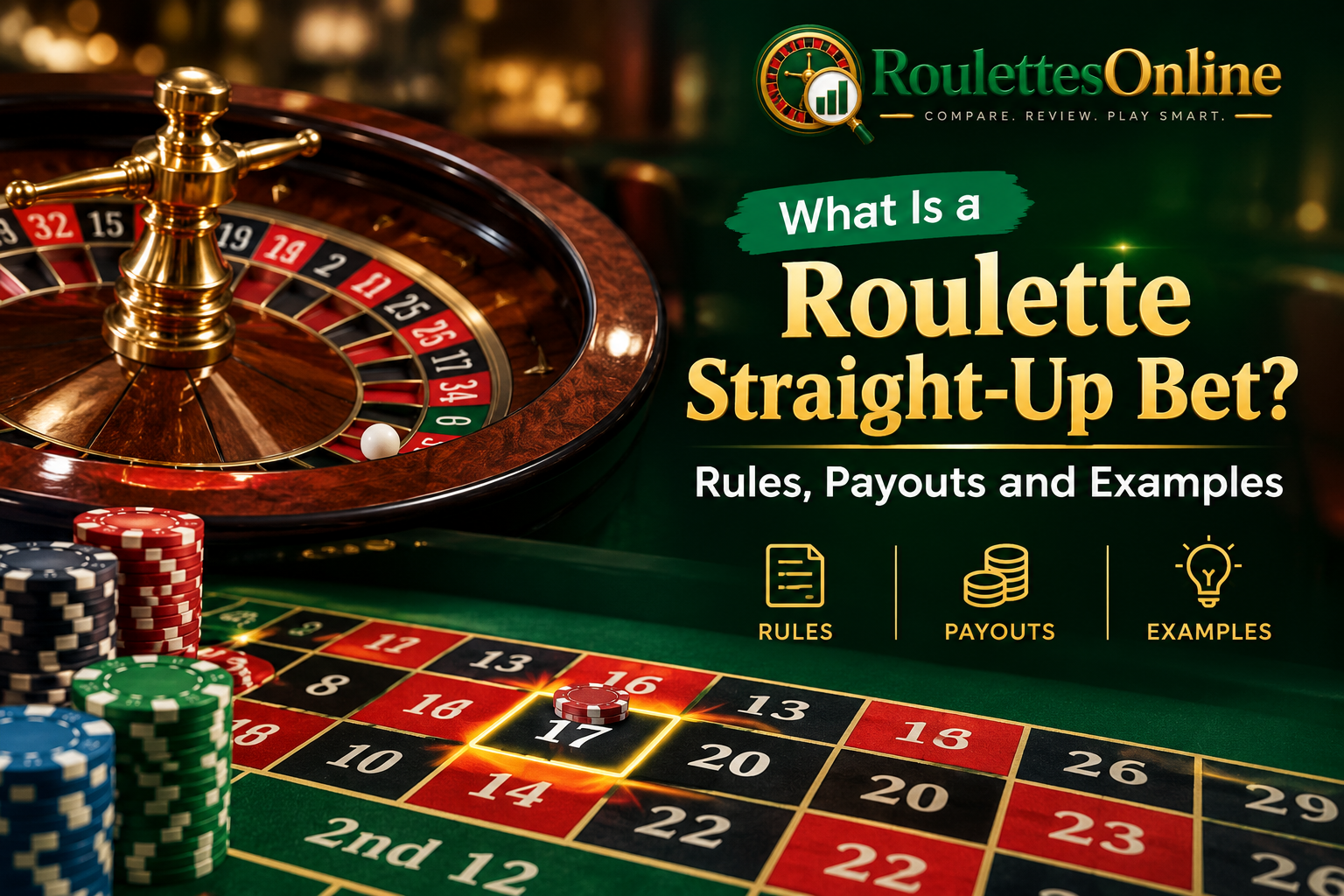
A straight-up bet selects one number, such as 7, 17, or 29.
It pays 35:1, making it one of the highest-paying standard roulette bets. But on a European wheel, the chance of hitting your selected number is only 1 in 37, or approximately 2.70%.
If you wager $10 and win, you receive $350 in profit plus your $10 stake.
The attractive payout should not distract you from the low probability of success.
Split bet
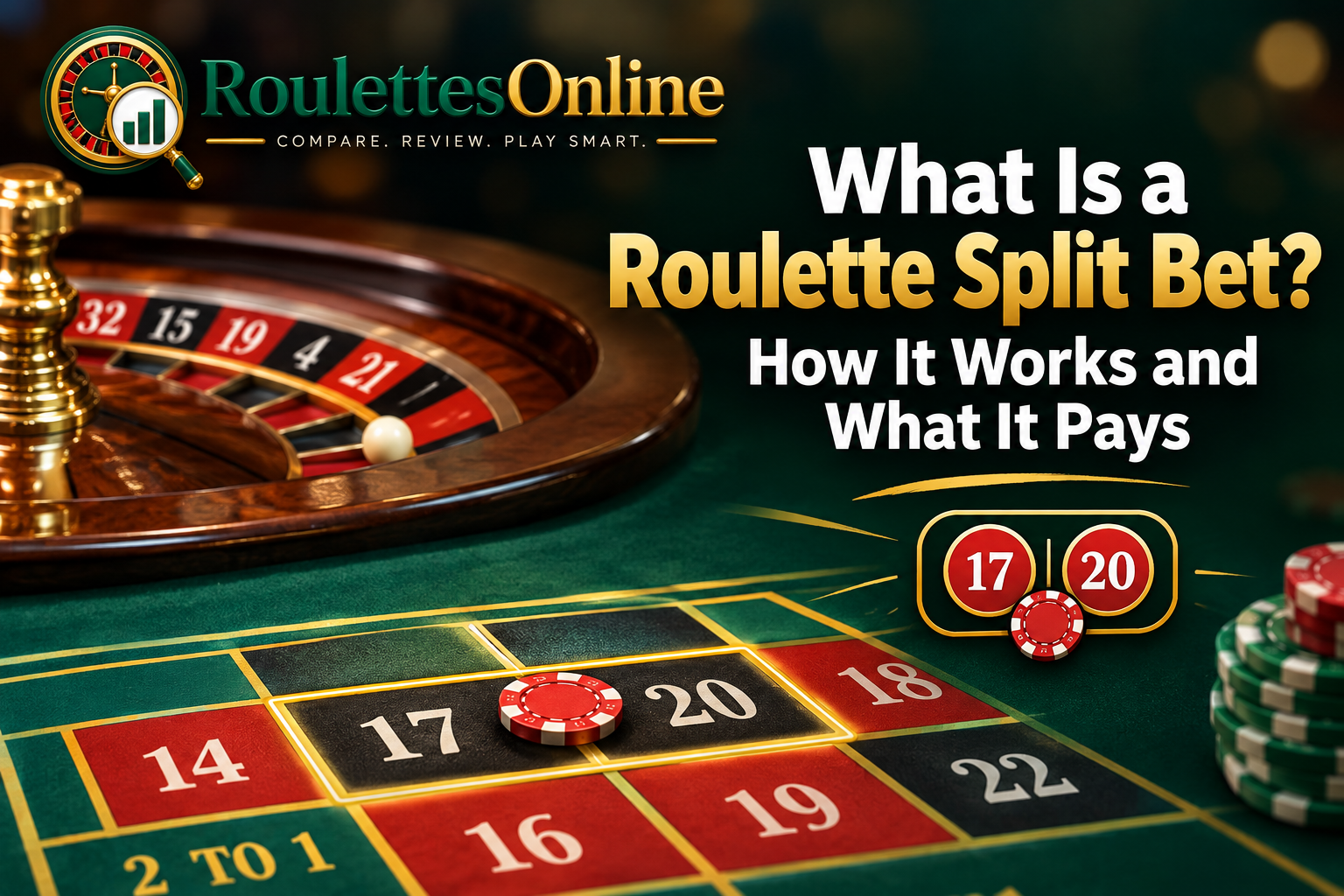
A split bet covers two neighbouring numbers on the table. For instance, you might place a chip on the dividing line between 17 and 20, provided those numbers are adjacent on the layout.
The payout is 17:1.
Because the bet covers two numbers, it has twice the winning probability of a straight-up bet on a European wheel: 2 in 37, or approximately 5.41%.
Street bet
A street bet covers three consecutive numbers arranged in a horizontal row, such as 1, 2, and 3.
It pays 11:1 and has a 3-in-37 winning probability on a European wheel.
Corner bet
A corner bet covers four numbers that meet at a corner on the betting grid.
It pays 8:1, with a winning probability of 4 in 37, or approximately 10.81%, on a European wheel.
Six-line bet
A six-line bet covers two adjacent rows, including six numbers in total.
It pays 5:1. The chance of winning on a European wheel is 6 in 37, or approximately 16.22%.
These inside bets provide different combinations of coverage and payout. Nevertheless, on standard wheels, none has a lower house edge than the others. Their main difference is how often they win and how much they pay when they do.
Which Roulette Bets Have the Best Odds?
The answer depends on what you want to compare.
Lowest standard house edge
Choose a single-zero roulette game. European Roulette typically has a 2.70% edge, while French Roulette with La Partage offers approximately 1.35% on qualifying even-money bets.
Higher chance of winning a single wager
Red or black, odd or even, and low or high each cover 18 numbers. They offer the highest win probability among the common standard bets, although zero remains a losing outcome.
Higher payout on a successful bet
Straight-up bets pay 35:1. Their potential winnings are much larger, but the chance of hitting the selected number is much lower.
The most useful distinction is between a bet’s chance of winning and its expected return. A bet that wins regularly can still lose money over time, while a high-paying bet can produce long periods without a win.
No standard betting choice eliminates the house advantage.
How to Compare Roulette Bets When Playing Online
Before choosing a roulette table, compare its rules, payouts, and house edge rather than focusing only on graphics or minimum stakes. Use the table below to evaluate the key factors before playing.
| What to Check | What to Look For | Why It Matters |
| Wheel type | Single-zero or double-zero | European Roulette generally has a lower house edge than American Roulette. |
| Payout table | The payout for each type of wager | Helps you understand potential winnings and total returns. |
| French rules | La Partage or En Prison | These rules may reduce losses on eligible even-money bets, depending on the game conditions. |
| Payout vs. return | Whether the original stake is included | A 2:1 payout typically means two units of profit plus your returned stake if you win. |
| Budget limits | Set a spending limit before playing | Helps prevent overspending and chasing losses. |
| Independent spins | Each spin is a separate event | Previous results do not make a number or colour more likely on the next fair spin. |
When comparing roulette online games, use these factors to understand the conditions and risks. Avoid relying on betting patterns or claims of guaranteed wins, as no strategy can eliminate the house edge or ensure a profit.
Can a Betting Strategy Improve Your Odds?
Roulette systems such as Martingale, Fibonacci, and D’Alembert change how much you wager after wins or losses. They do not change the probability of the ball landing on a particular pocket.
For example, the Martingale system involves doubling your next wager after a loss in an attempt to recover previous losses with a small profit. The problem is that losing streaks can rapidly increase the required stake, while table limits and a finite bankroll restrict how far the system can continue.
A more practical approach is to understand the rules, choose a game with a favourable house edge, use stakes you can afford, and establish a stopping point before playing.
These habits do not guarantee a profit, but they help you make informed decisions about the risks involved.
Final Thoughts
So, which Roulette Bets have the best odds? There is no single answer for every player because winning probability, payout size, and house edge measure different things.
Outside bets offer relatively frequent wins. Dozen and column bets provide a middle ground between coverage and payout. Inside bets deliver larger potential winnings but require more specific outcomes.
If your priority is reducing the mathematical disadvantage, focus first on the roulette variant. A European single-zero wheel generally has a lower house edge than a standard American double-zero wheel, while French Roulette with La Partage can be especially favourable for eligible even-money bets.
Understanding casino house edge is more useful than chasing high payouts or relying on betting systems. When exploring roulette online, compare the rules, know what each wager covers, and treat every spin as an uncertain outcome rather than a predictable opportunity.
Roulette involves financial risk. Only play if you meet the legal age requirement in your location, and never wager money needed for essential expenses.
Responsible Gambling
Roulette should be enjoyed as a form of entertainment, not as a way to earn money or recover losses. Set a clear budget and time limit before playing, never gamble with money needed for essential expenses, and avoid chasing losses. Remember that every spin is unpredictable and no betting strategy can guarantee winnings or eliminate the house edge. If gambling begins to affect your finances, relationships, or well-being, take a break and seek support through trusted resources such as BeGambleAware, GamCare, or Gambling Therapy, which provide information and guidance for people experiencing gambling-related harm.
Disclaimer
This article is intended for informational and educational purposes only and does not guarantee gambling outcomes or financial returns. Roulette odds, payouts, and house-edge figures may vary depending on the game variant, provider, and rules. Gambling involves the risk of financial loss, and no betting system can guarantee profits. Always check the rules of your chosen game, follow the laws applicable in your location, and gamble responsibly.
Frequently Asked Questions
1. Which roulette bet has the highest chance of winning?
Among common standard bets, red or black, odd or even, and low or high have the highest individual win probability. Each covers 18 numbers, giving a 48.65% chance on a European wheel and a 47.37% chance on an American wheel. The zero pockets prevent these bets from having a true 50% chance.
2. Which roulette bet has the lowest house edge?
On a standard single-zero wheel, most bets have a house edge of approximately 2.70%. French Roulette with the La Partage rule reduces the edge to approximately 1.35% on qualifying even-money bets when zero appears.
3. Are high-paying roulette bets better than low-paying bets?
Not necessarily. A straight-up bet pays 35:1 but covers only one number. Red or black pays 1:1 but covers 18 numbers. A higher payout does not automatically make a bet more profitable because the chance of winning must also be considered.
4. Is European Roulette better than American Roulette?
From a mathematical perspective, standard European Roulette has a lower house edge of 2.70%, compared with approximately 5.26% for American Roulette. This difference comes from the European wheel having one zero and the American wheel having both zero and double zero.
5. Can you beat the casino house edge with a roulette system?
No standard staking system can eliminate the house edge on a fair roulette wheel. Systems such as Martingale change bet sizes but do not change the underlying probabilities. Winning streaks can happen, but they do not guarantee long-term profit.
6. What should beginners check before playing roulette online?
Beginners should check the wheel type, payout table, zero rules, minimum stake, and any special rules that affect winning wagers. It is also important to set a spending limit, understand the risks, and avoid chasing losses.